





Ever since its existence, humans have found ways to express themselves. Be it a sound, a gesture, a text, or an artwork. Every final output has its initial stage. This is what we call evolution. And when we talk about evolution, cave paintings enter the mind. We started to paint before originating a language.
Every culture in this world is being kept alive by its indigenous people. But what is the meaning of Indigenous? Natives? An old community? Not limited to an area, time, or group. It’s something sacred.
Let’s dive deeper to know everything in this blog.
The Indigenous Difference: People, Culture, Artists & Art
Most of us have this common misconception that Indigenous culture or people is just a group who likes to promote themselves and their history.
But, wait! There’s something more to explore. Why don’t we understand the difference between People, Culture, Artists & Art? Here’s the way:
| No. | The Stage of Being Indigenous | What Does It Actually Mean |
| 1 | People | A person meets another and soon the community forms for social interaction, stability, protection & support. |
| 2 | Culture | When a community is formed, some patterns are made there. Soon those patterns become rules and rituals. By then, they adopt these rules and patterns as their identity. |
| 3 | Artists | When it comes to identity, people love to feel unique and timeless. They play, dance, paint, write, and act to express their pleasure and suffering. |
| 4 | Art | People deal with emotions, but artists feel them at a higher level. They don’t just feel the pain but turn it into art or an expression. Indigenous people form folk art, which helps them memorably express themselves and their culture. |
And this is how art is born. However, we should not categorize any artwork into just colours and strokes. There’s more to this! We will gain another perspective in the next section.
“Artwork is the Spectrum of Emotions”
Whenever we see a painting or any other form of art, first we notice the colours, then the lines. Sometimes patterns and sometimes strokes. Any form of artwork tells a story, either of the artist himself or the way he sees the world.
Do you know there are some distinct emotions an artist might feel that lead to the formation of any piece? Emotions are not simple, like just pain, pleasure, happiness, or sadness. There is a whole spectrum of emotions which no one talks about. Let me show you how:

| Emotions Spectrum | Hurt to Heal | Threat to Defense | Connection | Self-evaluation |
| 1. | Attachment | Awkwardness | Awe | Guilt |
| 2. | Sadness | Confusion | Curiosity | Epiphany |
| 3. | Envy | Hopelessness | Adoration | Observation |
| 4. | Disgust | Fear | Reminiscence | Criticism |
| 5. | Rage | Panicked | Nostalgia | Self-reflection |
| 6. | Detachment | Horrified | Craving | Sympathy |
| 7. | Satisfaction | Bravery | Depression | Empathy |
| 8. | Admiration | Relief | Melancholy | Appreciation |
| 9. | Excitement | Safety | Dejection | Gratefulness |
| 10. | Joy | Stability | Reflection | Liberation |
Many emotions are left as I can’t cover each one. But yes, the emotions I’ve just mentioned are the most prominent ones in folk art pieces.
How about we talk about some of the most popular and admired folk art styles of Indian indigenous people? Gear up, the next section awaits your arrival.
Folk Art Styles of India & Their Symbolism
When we talk about artworks made by Indigenous artists in India, Madhubani painting comes to mind first. Why? The double-lined outline filled with patterns and colours makes it eye-catching, and these paintings can be found on the walls of Mithila natives. But wait! There’s more to explore. You need to study the symbolism behind each folk art. Let’s catch up on that.
1 Madhubani Painting
Born in Mithila, Bihar, Madhubani art is inspired by the colours of life. People paint on their walls with handmade dyes and tints. They draw double-lined outline boundaries highlighting the vibrant figures of animals, trees, and flowers. The best thing is, they don’t just fill the colours but make unique little patterns with colours and monochrome effects.
2 Bhil Art
This is the language of dots, patterns, and simple lines. Bhil art originated from the lands of the north. Madhya Pradesh, Gujarat, Rajasthan, and Maharashtra are the birthplace of the Bhil tribe. His primary goal of making this art was not drawing lines and dots but making easy-to-remember and repetitive patterns. Mapping the routes and using dark colours on light canvas to showcase the message easily.
3 Gond Art
Gond art originated in Madhya Pradesh. Jangarh Singh Shyam made this art form the talk of the town through his dedication. His recent exhibition “Gond Pradhans of Patangarh” was a massive hit among art enthusiasts.
4 Warli Painting
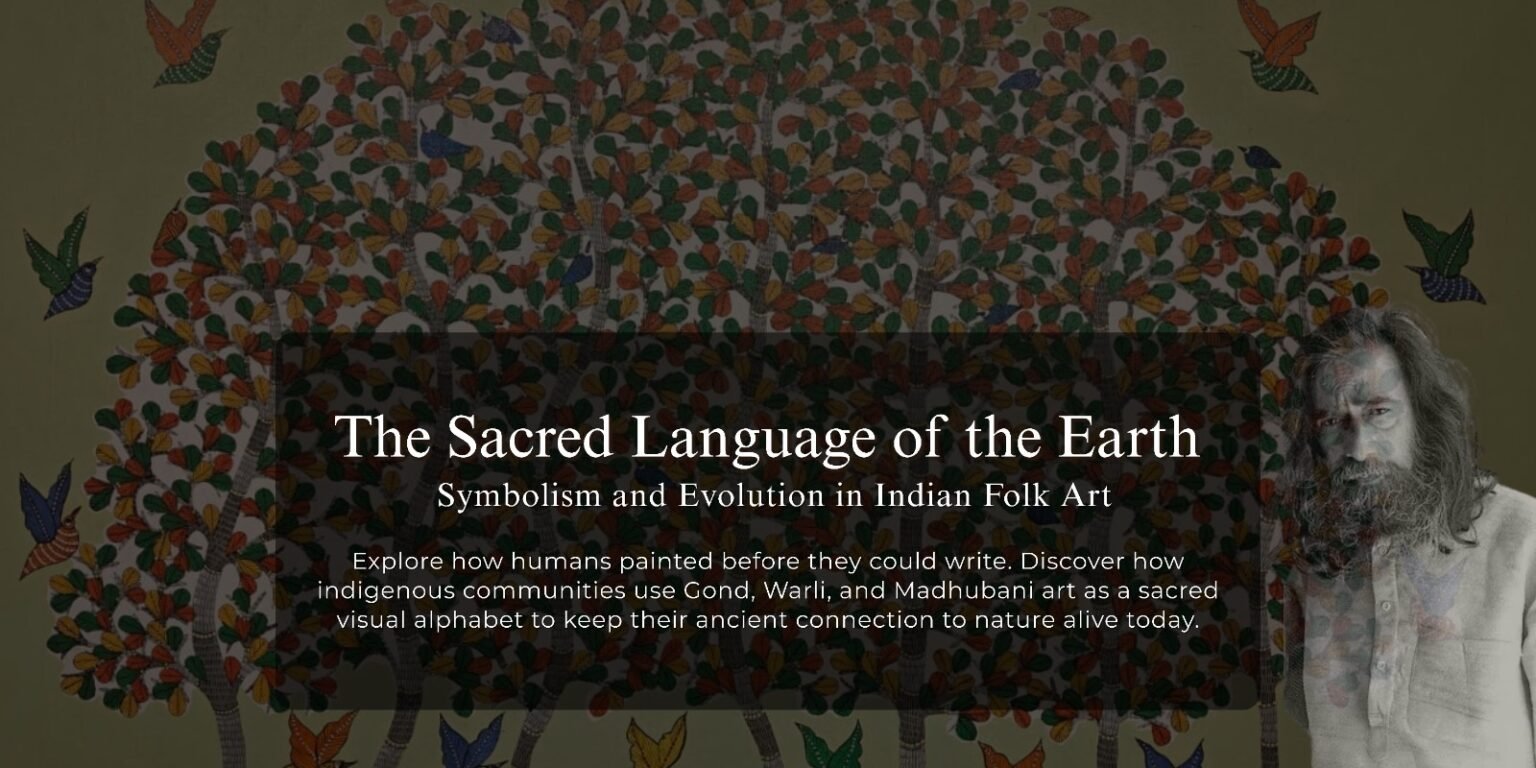
Warli painting is the identity of Maharashtrian ancient tribal culture. This art form looks simple yet powerful in its imagery. If you want to identify Warli art, look at the constant triangles, squares, and circles in these figures. This is inspired by the cave painting era. Here, artists try to make the scenes seem distinct even from afar. Talking about its popularity, the credit goes to Jivya Soma Mashe. He inspired Warli artists to commercialise their artworks and work on its showcase professionally.
Conclusion
Any kind of artwork is the result of life and emotions observed by an artist. By preserving this painting, we won’t just make a collection but make every culture alive again. Preserving the efforts of artists is really important. Indira Gandhi Rashtriya Manav Sangrahalaya (IGMRS) in Bhopal (M.P.) has the most unique tribal material culture. Also, places like the Madhya Pradesh Tribal Museum, Bhopal (M.P.), and The Adivasi Academy, Vadodara (Gujarat) have vast collections to discover a new portal of artworks.