




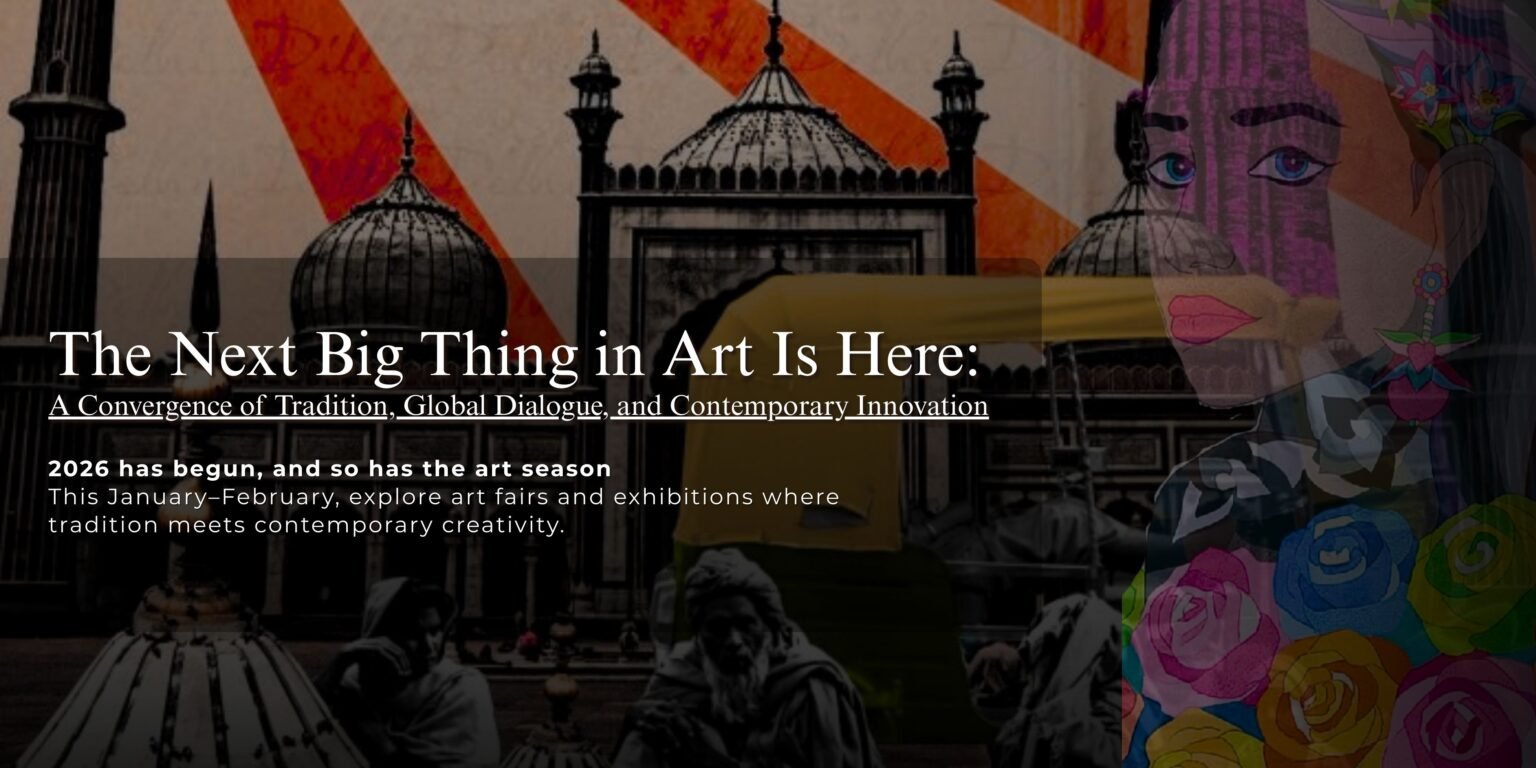

As January unfurls its winter light across the Indian subcontinent, a remarkable constellation of art and craft events emerges, each amplifying the narrative of cultural heritage, contemporary practice, and global artistic exchange. For collectors, advisors, curators, and cultural patrons alike, January-February 2026, in India promises not merely a season of exhibitions, but a critical moment in the evolution of South Asia’s visual arts landscape.
India Art Fair 2026: A Global Benchmark Returns
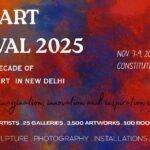
The India Art Fair, now in its 17th edition, has long been regarded as the definitive meeting ground for South Asia’s dynamic art world. Scheduled 5–8 February 2026 at the NSIC Exhibition Grounds, New Delhi, the fair returns with unprecedented scale and ambition. Organizers have announced a record participation of 123 exhibitors, comprising 87 galleries, 24 major art institutions, and an expanded design section that includes 12 studios and two design galleries, signalling not only growth but diversification of discourse within the fair’s programming.
This year’s India Art Fair resonates with a dual commitment: to global engagement and deep local specificity. Galleries of international stature, including David Zwirner, Galleria Continua, and Carpenters Workshop Gallery, will be interspersed with South Asian heavyweights such as Vadehra Art Gallery, Nature Morte, and Experimenter.
Crucially, the fair’s Focus section has curated solo showcases for artists whose work navigates contemporary visual vocabularies with compelling rigor: Bharti Kher, Shailesh B.R., Ravinder Reddy, Girjesh Kumar Singh, Thandiwe Muriu, and Khadim Ali. Meanwhile, large‑scale projects, including immersive installations by Paresh Maity and Deepak Kumar, suggest a program that juxtaposes figurative inquiry with experiential form.
From an advisory perspective, India Art Fair 2026 reframes what it means to collect and engage with art in the 21st century. It is not only a commerce‑driven marketplace but an incubator for critical dialogues that traverse materiality, identity, and post‑colonial imaginaries. For collectors and institutions, it is a rare moment to witness the entanglement of local histories and global narratives within a single, curated ecosystem.
The Art of India 2026: Curated Grandeur at India Habitat Centre
Running 10-18 January 2026 at the India Habitat Centre, New Delhi, The Art of India 2026, presented by The Times of India with Standard Chartered Bank as the Global Indian Partner, offers a contrasting yet complementary experience to the India Art Fair. While the latter foregrounds contemporary dialogue, this curated luxury art collective celebrates the richness and diversity of Indian artistic traditions, from heritage‑inspired works to modern interpretations that reflect centuries‑deep cultural depth.
As an immersive cultural event, The Art of India unites master artists, timeless aesthetics, and contemporary practices under one roof. Through a disciplined curation that resists the ephemeral, this exhibition invites connoisseurs to engage with India’s artistic genealogies, an essential experience for those seeking context beyond market metrics.
Surajkund International Crafts Mela 2026-Artisans, Community, and Cultural Exchange
Bridging the divide between craft and fine art, the Surajkund International Crafts Mela stands as one of India’s most enduring cultural spectacles. The 39th edition, slated 31 January to 15 February 2026 in Surajkund, Faridabad, Haryana, continues its legacy of showcasing the vibrancy of indigenous crafts alongside global traditions. This year, Egypt has been announced as the partner nation, a relationship that will be expressed through architectural motifs inspired by the Pyramids, Luxor temples, and the bustling markets of Cairo. Indian states such as Uttar Pradesh and Meghalaya also feature as theme states, foregrounding regional crafts and culinary traditions.

Originally conceived in 1987 to preserve waning traditional techniques and provide artisans direct market access, Surajkund Mela today spans over 40 acres with approximately 1,000 work huts. ([Haryana Tourism][4]) For the art advisory and cultural tourism sectors, the mela represents a living archive of artistic forms, textiles, pottery, woodcraft, metalwork, and regional ornamentation, that are critical to understanding India’s complex material cultures.
Beyond commerce, its daily performances, live demonstrations, and culinary diversity animate a holistic cultural experience. From the rhythmic pulse of folk dances to the intricate handwork of master weavers, this event uniquely situates craft not as ancillary to contemporary art, but as its organic ancestor.
Meena Sansanwal: Divine Manifestation at Black Cube Gallery
Amidst these larger fairs and melas, individual artistic voices continue to shape the cultural moment. One such voice is Meena Sansanwal, whose upcoming solo exhibition “Divine Manifestation” at Black Cube Gallery, Hauz Khas, New Delhi (7-22 January 2026) asserts the female form as a vessel of metaphysical and symbolic potency.
Sansanwal’s practice, spanning paintings, paper‑mâché sculptures, and mixed‑media installations, unfolds a cosmology where the sacred and surreal converge. Her works, drawn from a decade of contemplative creation, dissolve conventional boundaries between psyche and cosmos, inviting the viewer into a liminal space where form becomes philosophical enquiry.
For advisors and collectors seeking deeply personal yet universally resonant works, Sansanwal’s exhibition represents a rare synthesis of formal discipline and intuitive expansiveness.
What distinguishes this period in India’s cultural calendar is not merely the quantity of events, but the quality of artistic discourse that permeates them. From the globally scaled India Art Fair to craft‑rooted dialogues at Surajkund, and from curated cultural narratives at The Art of India to the introspective universe of Meena Sansanwal, January-February 2026 crystallizes an expansive vision of what Indian art is and can be.
For practitioners in art advisory, gallery representation, and cultural consultancy, these moments are not optional: they are generative sites where new trajectories of collecting, interpretation, and engagement are actively shaped.