





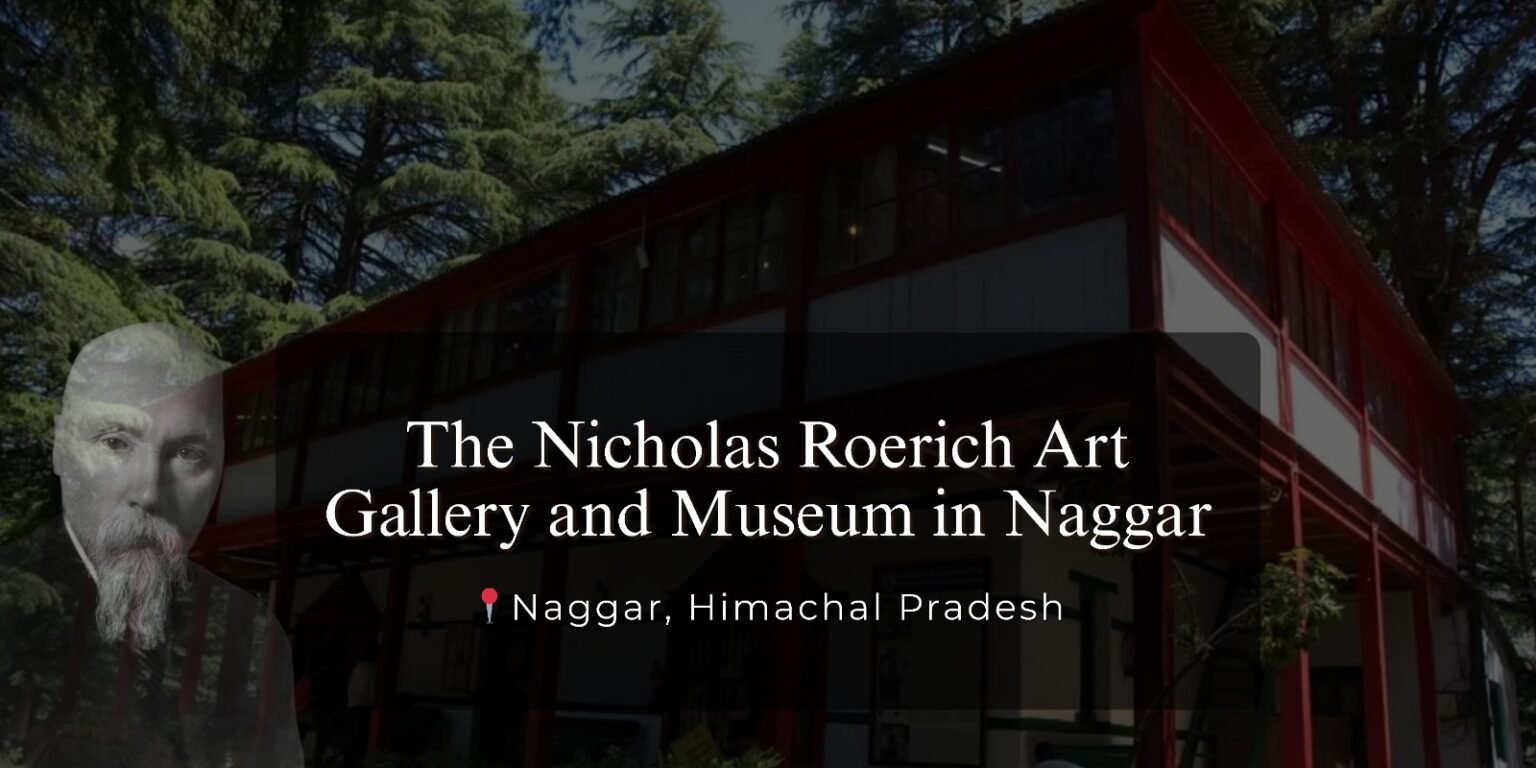

Nestled amid the tranquil foothills of Himachal Pradesh’s Kullu Valley, the Nicholas Roerich Art Gallery and Museum in Naggar stands as both a monument to artistic devotion and a testament to transcultural dialogue. Its gardens and whitewashed façades evoke a serene atmosphere that belies the complexity of the artist’s life and work housed within. More than a mere tourist destination, this site bridges history, spirituality, and artistic imagination, and invites careful reflection on the meanings of cultural legacy in a global context.
The Artist and His Place
Nicholas Roerich (1874–1947) was a Russian polymath whose creative and intellectual pursuits defy narrow categorisation. Born in Saint Petersburg, he was equally at home as a painter, writer, archaeologist, philosopher, and cultural advocate. Trained both in law and arts, Roerich’s lifelong engagement with cultural history began in his youth and was shaped by extensive travels, esoteric spirituality, and a profound sensitivity to landscape and myth.
Despite his Russian origin, it was the Himalayas that became the defining landscape of his mature practice. Between the 1920s and 1947, Roerich produced hundreds of paintings inspired by the mountains of Kullu, Spiti, Lahaul, Ladakh and beyond, a body of work characterised by luminescent colour, symbolic intensity, and an abiding engagement with the spiritual dimensions of place.
Roerich’s commitment to cultural preservation extended beyond pictorial representation. In 1935, his advocacy culminated in the Roerich Pact and its emblem, the Banner of Peace, an early international treaty aimed at protecting cultural property during wartime, signed in the Oval Office of the White House. This ideal aligned him with early movements for cultural heritage protection, predating later frameworks such as UNESCO’s World Heritage initiatives.
The Naggar Estate and Its Transformation
Roerich first settled in Naggar in the late 1920s, drawn by the expansive vistas and cultural richness of the Western Himalayas. Here, the natural terrain and the rhythms of local life became foundational to his artistic and philosophical vision. He continued his Himalayan expeditions and deepened his engagements with Indian thinkers and political figures, including Jawaharlal Nehru, who appears in photographic documentation alongside the artist at the site.
Following his death in 1947, the Naggar residence, once a private home and studio, was transformed into a museum by his son, Svetoslav Roerich, himself a distinguished painter, and his daughter‑in‑law, Devika Rani, a celebrated Indian actor. Managed jointly by the International Roerich Memorial Trust (IRMT), a body established in the early 1990s with support from the Russian and Indian governments, the estate now serves as a cultural complex preserving the Roerichs’ heritage.
Architecture and Museum Experience
The architectural character of the Roerich Gallery retains the simplicity of its Himalayan setting. The original wooden structure, with its balconies and rooms overlooking snow‑capped peaks, reflects the aesthetic vernacular of early 20th‑century Himalayan residences. The ground floor now functions as a gallery showcasing Roerich’s original Himalayan series paintings, vivid landscapes that anchor his vision of mountains as both physical and metaphysical presences.
Visitors ascend to appreciate the upper floors, where the artist’s personal rooms, preserved in their original state, offer an intimate gaze into his domestic life. Though entry to these chambers is restricted due to their fragile condition, viewing them through glass panels evokes a sense of walking within the historical continuum of his lived experience.


Beyond paintings, the estate suite includes photographic archives, personal memorabilia, and objects that bear testimony to Roerich’s interdisciplinary life. Among the more curious artifacts is a vintage Dodge car once used by the artist, a reminder of the practical realities that accompanied his visionary endeavours.
Urusvati and Collective Memory
A short distance uphill from the main gallery lies the Urusvati Himalayan Folk Art Museum, originally the Himalayan Research Institute founded by Roerich in 1928. ‘Urusvati’, meaning ‘light of the morning star’, was conceived as a centre for ethnological research, exploring Himalayan culture, traditional medicines, and spiritual sciences. Today, the museum’s collections of folk art, ethnographic artefacts, and regional crafts extend the gallery’s thematic reach beyond Roerich’s own practice to a broader appreciation of Himalayan cultural terrains.
The IRMT continues to evolve this legacy, with an articulated vision to integrate scholarship, exhibitions, and educational programmes that transcend geographical boundaries. Its activities are not merely custodial but aim to foreground dialogues between global artistic histories and Himalayan lived realities.
Artistic Legacy in Contemporary Context
For art professionals, from advisors and consultants to curators and institutional stewards, the Roerich Art Gallery represents more than an isolated museum. It is a site where cross‑cultural exchange, historical depth, and site‑specific artistic imagination converge. The preservation of Roerich’s body of work and the surrounding estate underscores a critical model for sustaining artistic legacies: one that encompasses both material conservation and interpretive engagement with broader cultural narratives.
In an era where the market often eclipses context, the Naggar complex stands as an alternative locus of value, one where heritage, environment, and creative spirit are inextricably linked. It invites not only visual appreciation but also intellectual inquiry into how art can embody both local resonance and universal aspiration.