





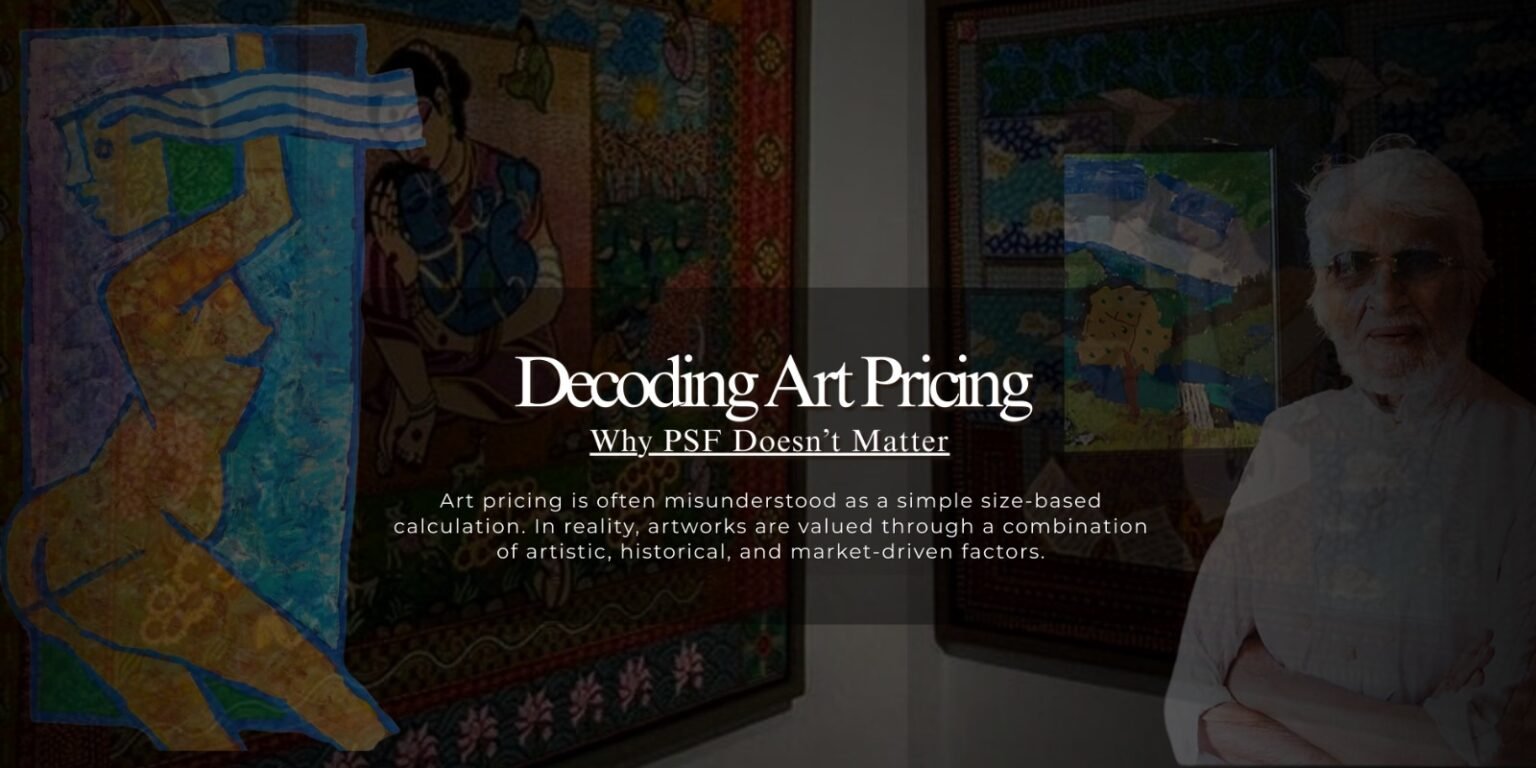

Art pricing is one of the most misunderstood aspects of the art market. A common misconception is that the value of an artwork can be reduced to a simple Price per Square Foot (PSF) calculation, reminiscent of real estate valuation, where size alone dictates monetary worth. This reductive view, however, obscures the multidimensional forces that genuinely shape market value. In reality, art pricing reflects a complex interplay of artistic merit, historical significance, rarity, provenance, market demand, and cultural context. Understanding why PSF matters far less than many assume requires a closer look at what truly drives value in the art marketplace.
Why Size Alone Is Insufficient
In fields like real estate, PSF serves as a straightforward benchmark: larger spaces generally cost more per unit because of tangible costs such as land, construction, and utility. Some observers mistakenly attempt to transplant this logic into the art market, arguing that larger works should be priced higher simply because they occupy more physical space. While larger works can command higher prices, this correlation is far from deterministic.
Art does not behave like a fungible commodity; production costs, materials, or sheer dimensions cannot account for the emotional resonance, prestige, and cultural value that shape a work’s worth. As noted in economic analyses of art markets, production costs rarely reflect market value; prices are driven instead by reputation, historical relevance, and social meaning, factors that defy simple measurement by square footage.
Consider a hypothetical: an acclaimed mid-20th century painting of modest dimensions versus a contemporary large canvas by an emerging artist. Conventional PSF logic might suggest the larger piece is more valuable. Yet collectors and advisors will almost invariably recognize that the established artist’s work commands significantly higher prices due to its historical position, critical acclaim, and proven market demand. This underscores an essential truth: PSF may serve as a conversational device, but it is by no means a determinant of true value.
Artist Reputation and Legacy: The Primary Engine of Value
Among the most influential factors determining an artwork’s price is the reputation of its creator. The historical trajectory of an artist’s career, including exhibition history, critical recognition, museum acquisitions, and auction performance, plays a central role in establishing value. Blue-chip artists like Pablo Picasso or Andy Warhol command high prices not because of canvas size, but because decades of institutional validation and market demand underpin their reputations.
Reputation functions as a form of social capital: a robust exhibition record, scholarly attention, and significant presence in museum collections all contribute to price stability and growth. For instance, works by artists featured in retrospective exhibitions at major global institutions often see a marked increase in market interest and corresponding price elevations.
Conversely, emerging artists with limited exhibition histories or weaker critical footprints typically start at lower price points, regardless of the size of their works. Over time, as their visibility and reputation develop, their market valuations may rise, but this trajectory hinges on sustained recognition and demand rather than dimensional metrics.
Provenance, Condition, and Documentation
Another indispensable component of valuation is provenance, the documented history of an artwork’s ownership and exhibition. Works with clear, distinguished provenance often achieve premium prices because the documented chain of custody enhances authenticity and desirability. Auction records consistently demonstrate that provenance can increase value significantly compared to works with undocumented or uncertain histories.



Similarly, physical condition plays an outsized role in pricing. Even works by highly regarded artists can command less if they exhibit significant damage or restoration issues, as buyers are acutely aware of conservation costs and long-term preservation risks. Auction houses and appraisers pay meticulous attention to these details precisely because they influence both aesthetic quality and investment security.
Rarity, Scarcity, and Market Demand
The intersection of rarity and demand is another core determinant of value. Unique works, limited editions, and pieces from periods of an artist’s output that are relatively scarce often attract higher prices. This phenomenon follows the basic economic principle of supply and demand: fewer available works with high collector interest naturally lead to more competitive bidding and elevated prices.
Market demand fluctuates with cultural trends, collector preferences, and broader economic conditions. Works that align with current market tastes, whether thematic, stylistic, or conceptual, tend to achieve higher valuations. Importantly, these demand patterns interact with an artist’s reputation and historical placement to shape long-term market trajectories.
Quality, Technique, and Artistic Merit
Beyond extrinsic factors, intrinsic qualities such as technical mastery, aesthetic innovation, and emotional resonance profoundly influence how a work is valued. Art that demonstrates exceptional craftsmanship or introduces novel visual languages resonates more deeply with collectors, advisors, and institutions. These qualitative elements cannot be quantified by square footage, yet they are central to how an artwork is appreciated and priced.
At the highest levels of the market, collectors are willing to pay substantial premiums for works that represent critical milestones in an artist’s practice or that encapsulate defining moments in art history. This underscores a fundamental insight: value in art is embedded first in meaning, innovation, and cultural impact, and only secondarily, if at all, in physical dimensions.
Toward a Nuanced Understanding of Art Value
In conclusion, the notion that art pricing can be distilled to Price per Square Foot stands as an appealing but ultimately superficial metric. While size may influence cost in certain exhibitions or internal pricing frameworks, it does not bear the weight of reputation, provenance, rarity, quality, and market demand that genuinely determine value.
For art advisors, collectors, and galleries, recognizing this complexity is essential not only for accurate valuation but also for fostering deeper engagement with art as both cultural artifact and financial asset. True valuation requires us to look beyond surface area, to the narratives, histories, and artistic achievements that give art its enduring worth.