




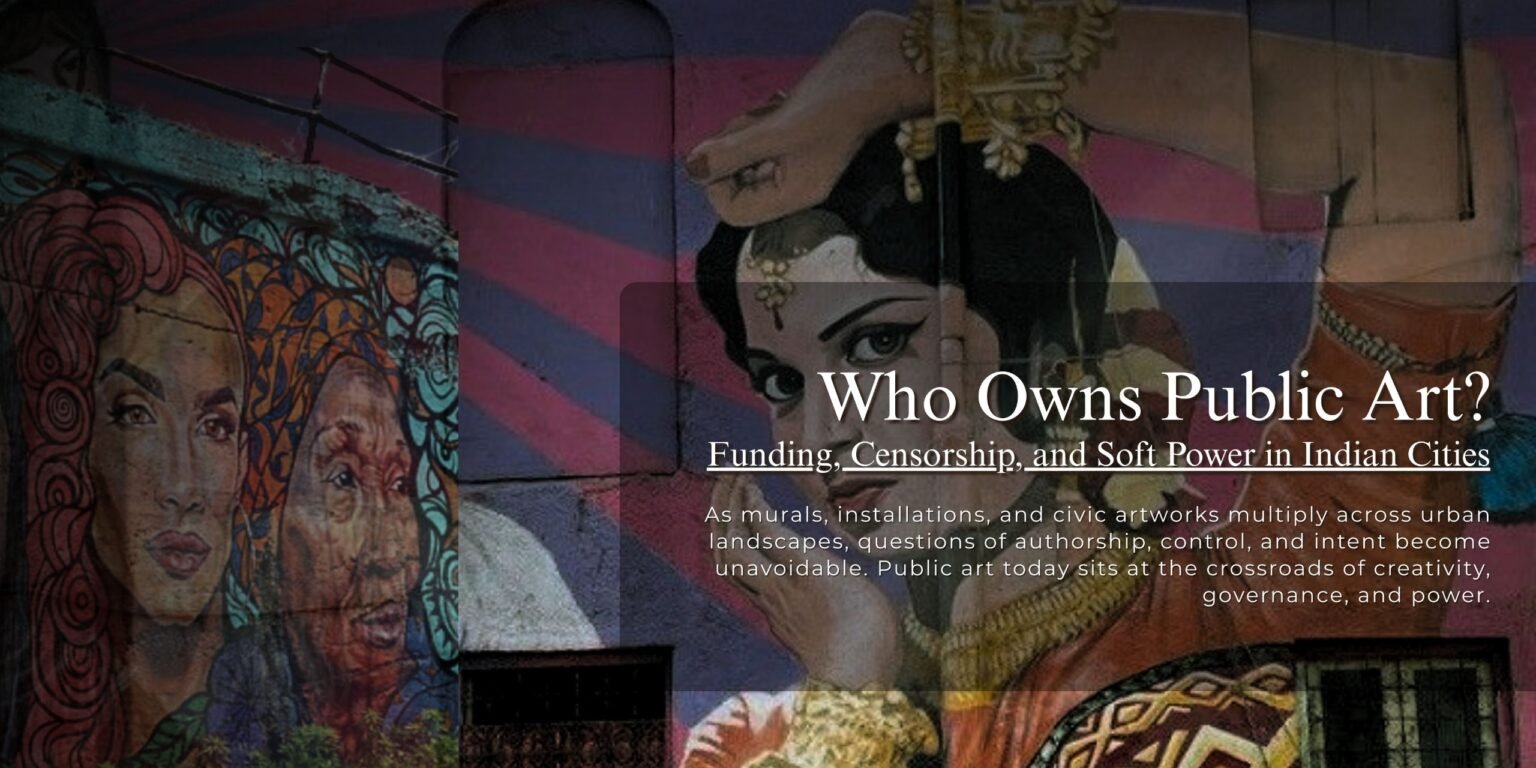

Public art in Indian cities has evolved far beyond decorative surfaces into contested terrain where aesthetics, politics, economics, and identity intersect. Whether manifested as vibrant murals along thoroughfares, official commissions on civic walls, or grassroots interventions on neglected surfaces, public art encapsulates the aspirations and anxieties of urban societies. Yet questions about ownership, funding, censorship, and cultural influence are neither peripheral nor trivial; they lie at the very heart of what it means to share public space in an era of both global connectivity and local assertion.
Public Art as Civic Strategy and Urban Branding
In cities across India, municipal authorities and development bodies increasingly embrace public art as a tool for urban renewal and branding. Long-standing initiatives such as the Lodhi Art District in New Delhi demonstrate how coordinated efforts can transform quotidian spaces into cultural precincts. Established between 2015 -16 under the aegis of Start India Foundation with support from government bodies and institutional partners, Lodhi Colony became India’s first open-air art district, featuring murals by Indian and international artists that animate residential facades and civic buildings. This district is now cited as a model for the integration of large-scale public art into everyday life, enhancing public engagement while attracting tourists and creative communities alike.
Similarly, municipal competitions like ‘Rang De Nagpur’ engage hundreds of artists to enliven city stretches with narrative murals commemorating civic heritage and identity. Organized by civic officials, these projects leverage public art to foster participatory pride and community narration of local history.
In Bhubaneswar, a coordinated citywide street art project has visually transformed nearly eight lakh square feet of urban surfaces. Under the Municipal Corporation and affiliated cultural organizations, multilayered murals ranging from abstract compositions to folk and contemporary figures now punctuate roads and neighbourhoods. Such efforts reflect the instrumentalization of public art for civic beautification while creating an accessible, on-the-move cultural experience for residents and visitors alike.
These examples point to a significant shift: public art is increasingly embedded in urban policy, not simply as ornamentation but as strategic interventions that shape perceptions of place, productivity, and cultural vibrancy
Funding Models: Public, Private, and Hybrid Patronage
Funding for public art in India today is fluid, drawing on a mixture of municipal allocations, corporate sponsorship, philanthropic foundations, and festival commissions. The Lodhi Art District itself emerged from a hybrid model involving government bodies, institutional partners, and independent foundations that underwrote artist fees and logistical support.
Outside New Delhi, private entities also sponsor public art projects that blur corporate branding with cultural expression. For example, large murals and installations in residential precincts and corporate parks often come with corporate backers seeking to enhance workplace environments or residential identity through aesthetic placemaking. Meanwhile, public art festivals like those associated with the Kochi-Muziris Biennale invite purposive sponsorship that integrates artistic innovation into public spaces while engaging diasporic and global audiences. At the grassroots scale, collectives such as the Aravani Art Project, founded in 2016 by Poornima Sukumar in Bengaluru, offer a compelling model of socially engaged funding and practice.
Centered on transgender and cisgender women muralists, the collective secures project-driven funding that allows participants to create murals articulating lived experiences, cultural motifs, and narratives of marginalization. Their work, while often supported through collaborations with festivals, municipal invitations, or NGO partners, emphasizes the reclamation of public space by socially marginalized creators themselves.

Thus, funding for public art in Indian cities is not monolithic; it spans public budgets, private sponsorships, collaborative networks, and community-based aggregations. Each model brings distinct implications for agency, accessibility, and artistic autonomy.
Censorship and the Politics of Visibility
Despite expanding visibility, Indian public art is not immune to censorship and regulatory control. Political murals that critique social conditions or governance can rapidly attract erasure. In Bengaluru, a mural addressing rising food and fuel prices was whitewashed within hours of its creation, a reminder that official aesthetic tolerance often does not extend to overt political expression.
Such instances highlight an uneasy relationship between expressive public art and state or municipal controls. While civic programs may commission art that aligns with development narratives, works with explicit dissenting or critical content risk removal or suppression. The tension here is not unique to India, yet it underscores how power structures influence which visual narratives are permitted in public space, and which remain vulnerable to erasure.
More subtle forms of constraint also manifest in regulatory frameworks or ambiguous municipal codes governing graffiti, wall inscriptions, and street art, leaving artists uncertain about legal protections or liabilities.
Soft Power and Cultural Identity
Public art also functions as soft power, shaping how cities represent themselves to their inhabitants and to global audiences. Murals celebrating local culture, heritage figures, and collective memories contribute to a shared civic identity while broadcasting a city’s values outward. In Varanasi, the ‘Kabir Math mural’ project illustrates how historical and spiritual narratives are foregrounded in public art to reinforce heritage and cultural continuity. Similarly, municipal approvals for themed murals and sculptures in pilgrimage towns like Badrinath signify the alignment of public art with cultural tourism strategies and heritage valorization.
Yet soft power in public art is not limited to celebratory narratives. Street murals that foreground equity, gender diversity, and ecological themes, whether commissioned or self-initiated, articulate alternate visions of urban collectivity. In doing so, they challenge monolithic cultural narratives and expand the symbolic repertoire of public space.
Public Art as a Shared Commons and Contested Terrain
In Indian urban contexts, public art is simultaneously a shared cultural commons and a site of contestation. Its ownership is not solely vested in municipal bodies or private sponsors; it resides in the dialectic between citizens, artists, authorities, and audiences. Funding arrangements that blend public, private, and community models have expanded opportunities for creative expression, yet also introduce questions about influence, editorial control, and narrative framing. Censorship, overt or latent, remains a potent constraint on politically charged expression, even as murals and installations become platforms for civic dialogue and identity assertion.
Ultimately, public art in Indian cities is a barometer of larger societal currents: it reflects aspirations for beauty, visibility, equity, and memory while also exposing tensions over space, power, and representation. As urban India continues to evolve, these painted walls, sculptural interventions, and collective murals will remain vital sites where the politics of public life are expressed, contested, and reimagined