





There’s a persistent myth in the art world that every household needs one “main” artist, one genius whose shadow the other partner quietly lives in. India’s art scene tells a different story. Across generations, cities, and mediums, some of the country’s most compelling creative work has come out of marriages and partnerships where both people made art, ran institutions, or built the platforms that carried Indian art to the world. And neither one dimmed the other’s light.
#ParPita: Arpita & Paramjit Singh
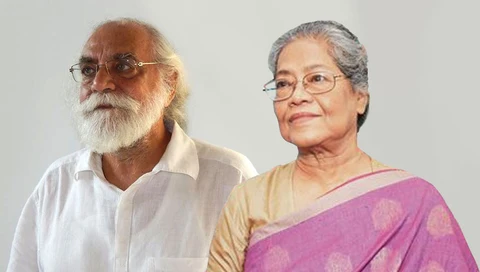
Married and painting for over six decades, Arpita and Paramjit Singh are maybe the ultimate proof that longevity and individuality aren’t in conflict. Arpita’s work is layered and narrative, often deeply feminist, while Paramjit’s landscapes are calm and lyrical. Two completely different visual languages, sustained across one long marriage. You don’t need to sound alike to grow old together well.
#ManDhavi: Madhavi & Manu Parekh
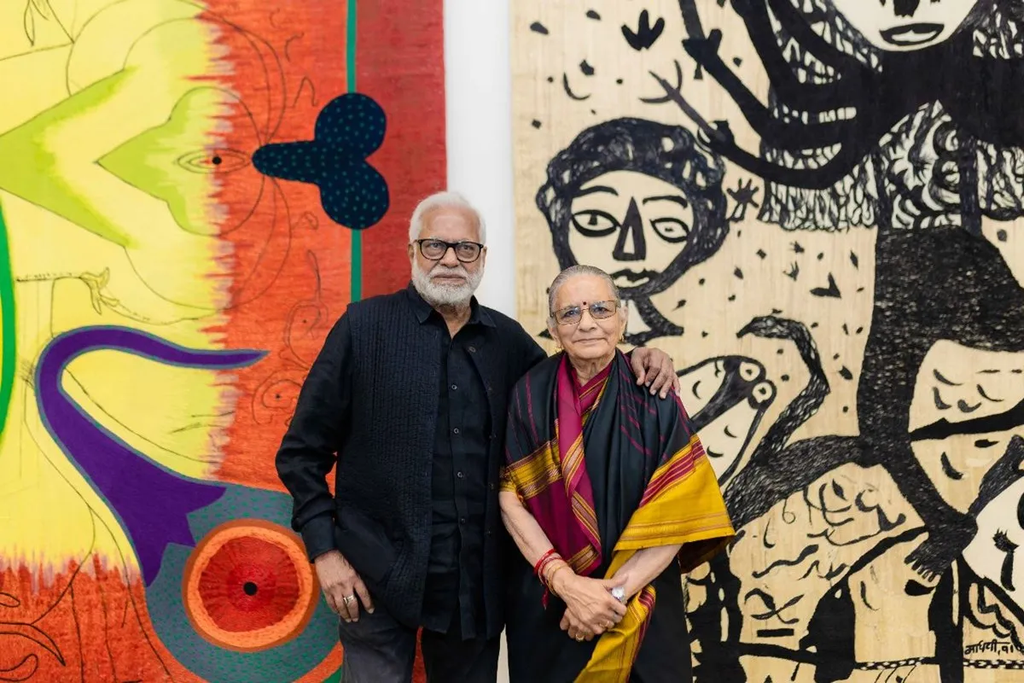
Married since the 1960s, Madhavi and Manu Parekh remain one of Indian art’s most interesting duos. Madhavi’s work leans folk and dreamlike; Manu’s Banaras paintings are bold and expressive. Neither has ever painted in the other’s shadow, which is rarer than it sounds in a world obsessed with one dominant voice per household.
#ParAsri: Jayasri Burman & Paresh Maity
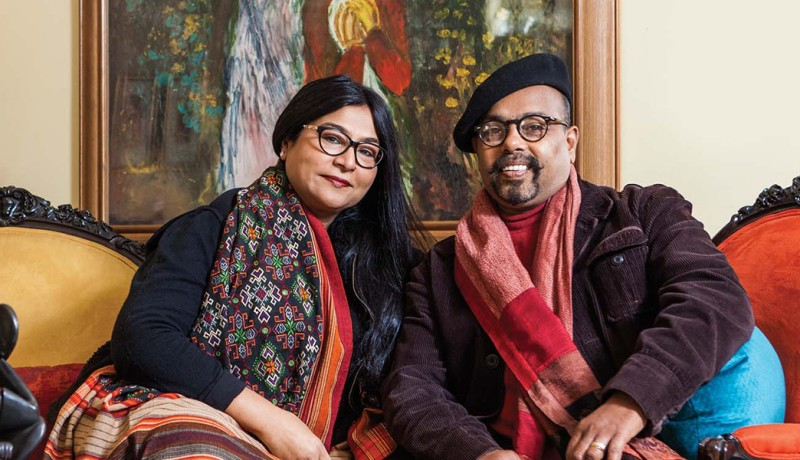
Jayasri Burman lives in myth, in goddesses, working in bronze and paper. Paresh Maity travels the world and brings it back in colour: watercolours, sculpture, whatever the moment calls for. Different worlds entirely, yet this couple has made room for both, and Indian contemporary art is richer for it.


#RatNa: Naina Dalal & Ratan Parimoo
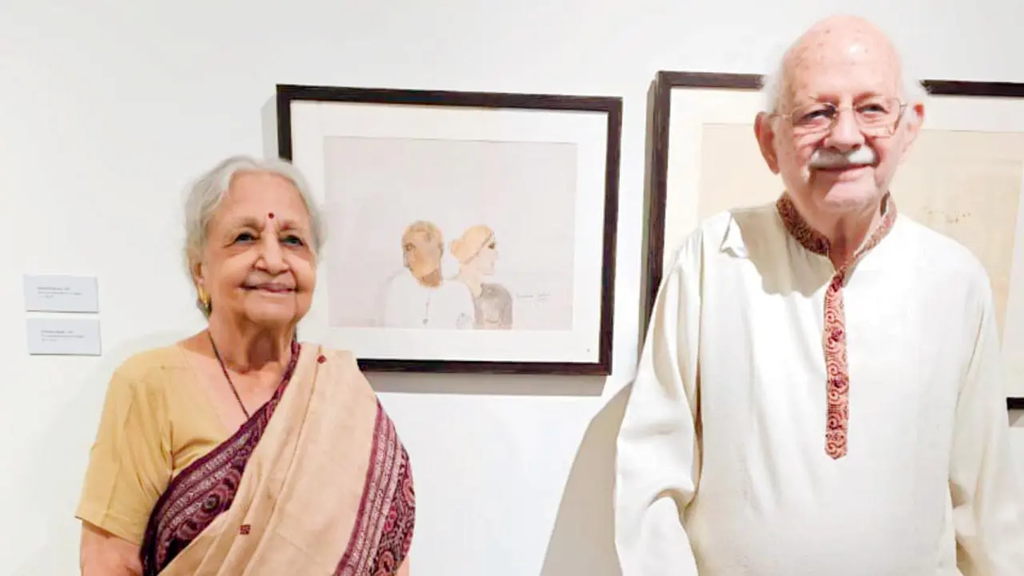
Not every art power couple needs headlines and auction records. Naina Dalal is an accomplished printmaker in her own right; Ratan Parimoo is a respected art historian and painter. Theirs is a quieter pairing, but a foundational one, the kind that has quietly shaped how generations of students understand art.
#SakTé: Maité Delteil & Sakti Burman
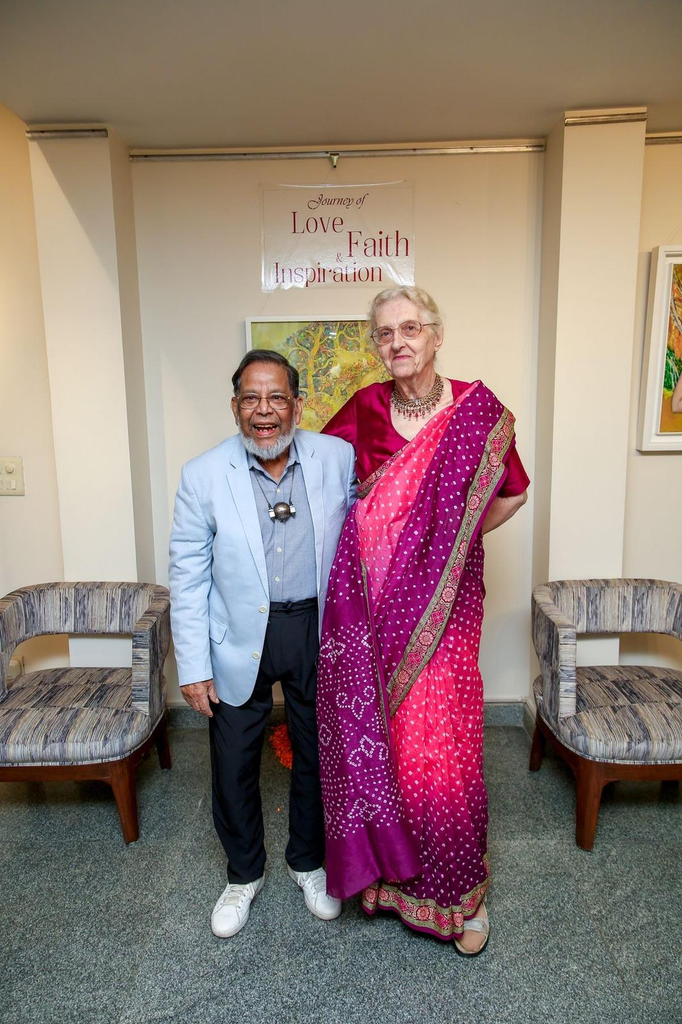
A Kolkata to Paris love story that turned into an ongoing artistic conversation. Maité brings her own distinct European sensibility to painting, while Sakti’s canvases are mythological and jewel toned. Two continents, two visual languages, one shared life. Same domain doesn’t have to mean sameness.
#RamUndhara: Vasundhara & Rameshwar Broota
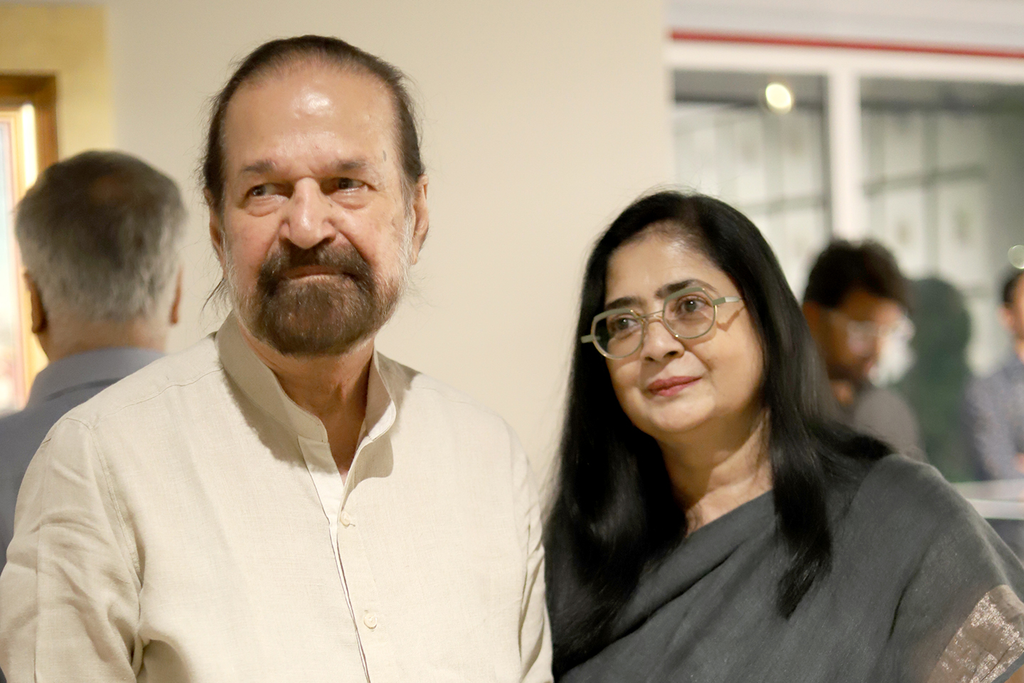
She trained under him at Triveni Kala Sangam. Somewhere between the lessons and the canvases, teacher and student became partners for life. Rameshwar is known for his scratch technique, uncovering the human body layer by layer. Vasundhara paints women with her own quiet, distinct intensity. Same studio, two very different visual voices.
#Gulima: Nilima & Gulam Mohammed Sheikh
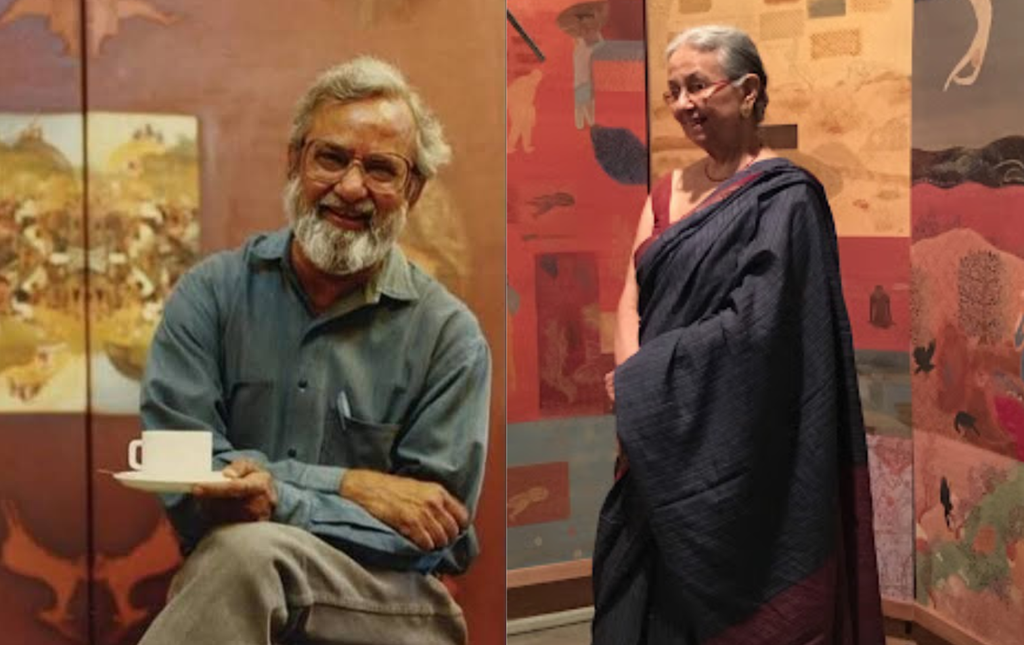
Two of the most quietly influential names to come out of the Baroda school. Nilima’s work is poetic, often centred on Kashmir and womanhood. Gulam’s paintings are layered and narrative. This is less a “power couple” in the flashy sense and more two serious thinkers who happen to share a life.
#BhaBodh: Bharti Kher & Subodh Gupta
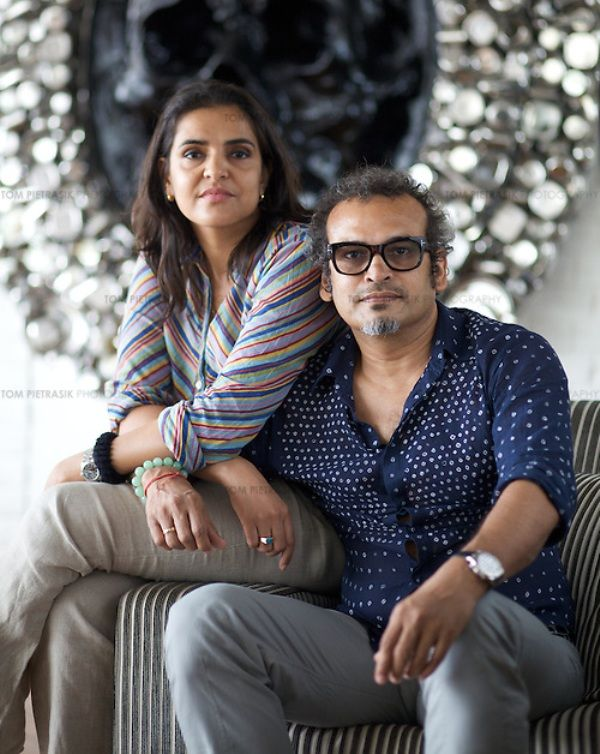
Probably the most internationally known art couple India has produced. Bharti Kher turns bindis and everyday materials into something unsettling and beautiful. Subodh Gupta does the same with steel utensils and kitchen objects. Both are obsessed with identity and the domestic, just from different angles, working out of the same Delhi studio.
#Udaina: Sunaina & Uday Jain
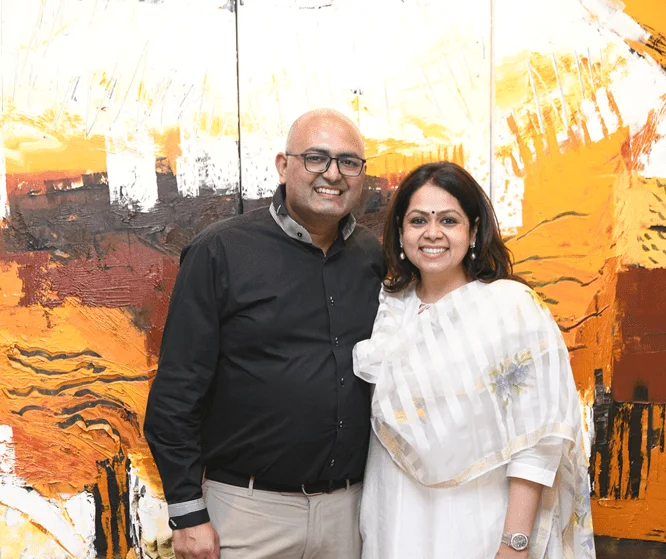
Not every important pair picks up a brush. Sunaina and Uday Jain run Dhoomimal Gallery, India’s oldest contemporary art space, established in 1936. Together, they’ve kept a piece of Delhi’s art history not just standing, but thriving for new generations of artists and collectors.
#MinDin: Minal & Dinesh Vazirani
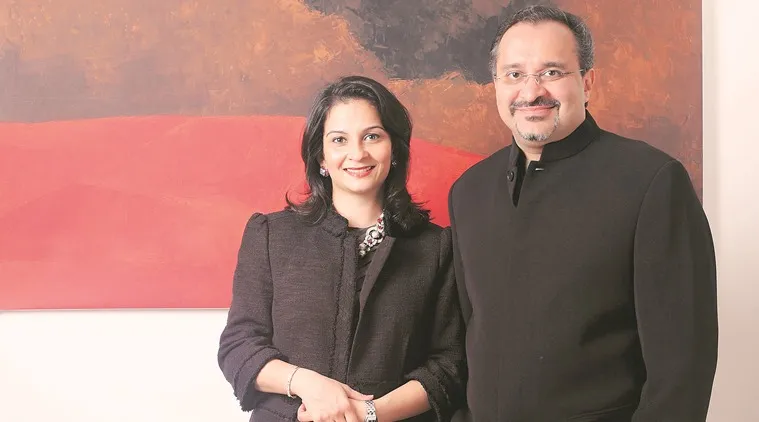
Minal and Dinesh Vazirani co-founded Saffronart, the auction house that helped bring Indian art online and onto the global stage. Their power move wasn’t a canvas, it was building the platform that changed how the entire industry works.
Some met as teacher and student. Some crossed continents to find each other. Some paint side by side in the same studio; others have never touched the same medium at all. A few didn’t make art in the traditional sense; they built the galleries and auction houses that made room for everyone else’s work to be seen and sold.
What they share isn’t a style or even a shared vocabulary. It’s something closer to mutual respect for difference, an understanding that two people can occupy the same house, the same decades, even the same studio, and still insist on their own visual language. In an art world that so often wants a single genius per household, one name to put on the wall, one story to tell, these couples are a quiet rebuttal. Two voices, one life, and neither one asking to be the footnote.