




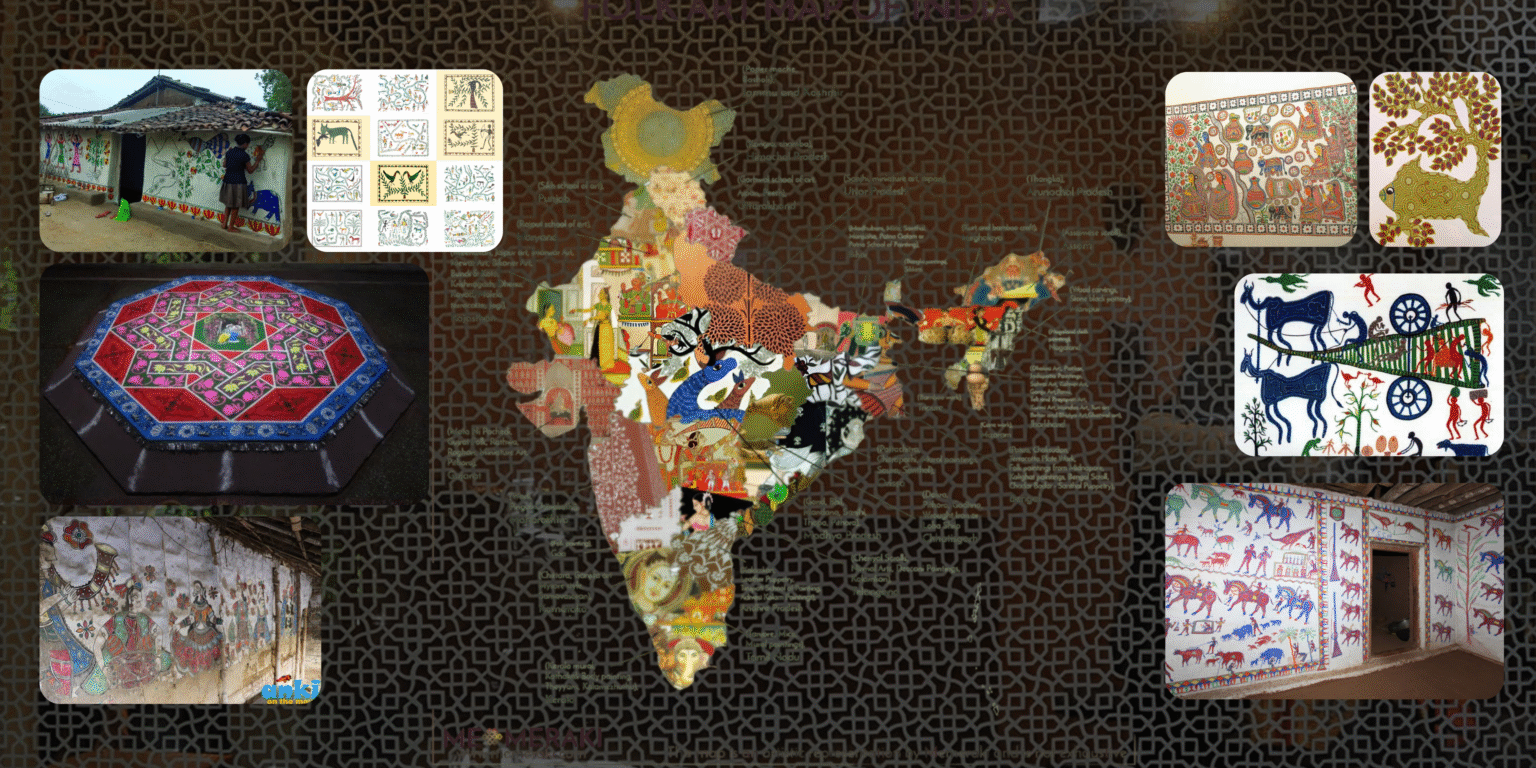

India’s artistic heritage is a kaleidoscope of colours, patterns, and traditions, shaped by centuries of culture, rituals, and the natural environment. Among its most captivating contributions are the folk and tribal art forms, which carry the wisdom, spirituality, and everyday life of communities across the country. From the intricate line work of Madhubani paintings to the geometric simplicity of Warli art, each form tells a story of its people, their surroundings, and their worldview. In this article, we take a journey through some of India’s most celebrated folk and tribal arts.
Madhubani Painting | Bihar
Madhubani painting, also called Mithila art, originates from the Mithila region of Bihar and is renowned for its vivid line drawings filled with bright colours. Traditionally practiced by women, this art form has now been embraced by men as well. Using natural pigments derived from turmeric, indigo, red sandalwood, and other plant and mineral sources, Madhubani artists apply colours flat, leaving no empty space.
The paintings are characterized by motifs inspired by nature, mythology, and daily life—ranging from Hindu deities such as Krishna and Durga to wedding scenes, court life, animals, birds, and floral patterns. Originally created on mud walls, the art has adapted to paper, cloth, and canvas for commercial purposes, providing a significant source of income for many families. The intricate designs and patterns are handed down through generations, preserving traditional aesthetics while gaining global appreciation.
Sanjhi Art | Uttar Pradesh
Sanjhi art, prevalent in western Uttar Pradesh, Rajasthan, Madhya Pradesh, and Nepal, is traditionally created during twilight, or ‘Sanjh.’ Known by different local names, it symbolizes the joy and auspiciousness of the evening. Historically, the art was made using cow dung or banana leaves and later with coloured powders on water.
Sanjhi art is closely linked to religious practices, often adorning temples like the Shrinathji temple in Nathdwara, Rajasthan. The motifs are highly stylized, symmetrical, and ephemeral, reflecting both devotion and artistic skill. This art form continues to captivate enthusiasts with its delicate, meditative patterns that evoke serenity and spiritual reflection.
Bhil Art | Madhya Pradesh
The Bhils of Madhya Pradesh have a rich visual culture expressed through their homes, rituals, and wall paintings. Bhil art often involves Pithora painting, a ceremonial practice performed by the lekhindra, or traditional painter, to honour deities. These murals depict mythological stories, daily life, and the creation myths of the Bhil people.
Natural pigments from plants and clay are applied using handmade brushes, preserving a deep connection with nature. Bhil paintings often celebrate communal events, births, weddings, and agricultural cycles. Artists like Bhuri Bai and Prema Fatya have brought Bhil art to national and international audiences, ensuring the survival and recognition of this vibrant tribal tradition
Saura Painting | Odisha
Saura painting, also called Lanjia Saura painting, is a traditional tribal art form practiced by the Saura community of Odisha. Deeply spiritual, these paintings are often created during festivals, marriages, or harvest celebrations to invoke blessings from deities and ancestors.Typically monochromatic, Saura paintings employ natural colours from soil, leaves, rice paste, and other organic materials. The motifs are intricate and geometric, representing aspects of daily life, nature, celestial bodies, and tribal mythology. These paintings serve as both a spiritual medium and a cultural record, preserving the Saura community’s worldview and connection with nature


Gond Painting | Madhya Pradesh
The Gonds, one of India’s largest tribal communities, have a rich artistic legacy known as Gond painting. Originating in the forests of Madhya Pradesh, Gond art was traditionally expressed on walls, floors, and temporary surfaces. It often depicts animals, deities, and natural patterns using vibrant dots and lines.Jangarh Singh Shyam was a pioneer in transferring Gond art onto paper and canvas, creating what is now known as Jangarh Kalam. Gond paintings are deeply symbolic, reflecting the community’s mythology, rituals, and environmental awareness. Today, Gond art has become internationally recognized, blending traditional motifs with contemporary artistic expression
Warli Painting | Maharashtra
Warli painting originates from the Warli tribe in Maharashtra and parts of Gujarat, using minimalistic geometric forms such as circles, triangles, and squares to depict scenes of daily life. Traditionally painted on mud walls with white pigment made from rice flour and water, Warli art represents humans, animals, and nature in symbolic forms.
Despite its simplicity, Warli painting conveys rich narratives of agricultural life, festivals, and communal activities. Its universal appeal lies in the balance between abstraction and storytelling, making it a celebrated example of India’s tribal artistry.
Santhal Painting | Bihar, Jharkhand, West Bengal
Santhal painting is a folk art closely associated with Santiniketan, inspired by Vaishnavite, Baul, and Santhal traditions. The art depicts daily village life, rituals, and mythology with vivid colours, often using leafy patterns and panoramic village scenes.
Figures in Santhal paintings are static, colourful, and symbolic rather than realistic. Women carrying water, men driving bullock carts, and family scenes are recurrent motifs, reflecting the harmony of human and natural life. Originally painted with natural colours, modern Santhal artists also use acrylics while retaining the spirit of their traditional forms.
Conclusion
India’s folk and tribal art forms are not merely decorative; they are living repositories of culture, spirituality, and environmental awareness. From Madhubani to Warli, each style captures the essence of community life, mythology, and devotion to nature. These arts provide invaluable insights into India’s diverse traditions and continue to inspire collectors, artists, and art enthusiasts worldwide.
Preserving and promoting these art forms ensures that the stories, skills, and worldviews of these communities continue to thrive, connecting past generations to the present and beyond. For anyone seeking to understand the heart of India’s visual culture, exploring its folk and tribal arts is an unforgettable journey.