




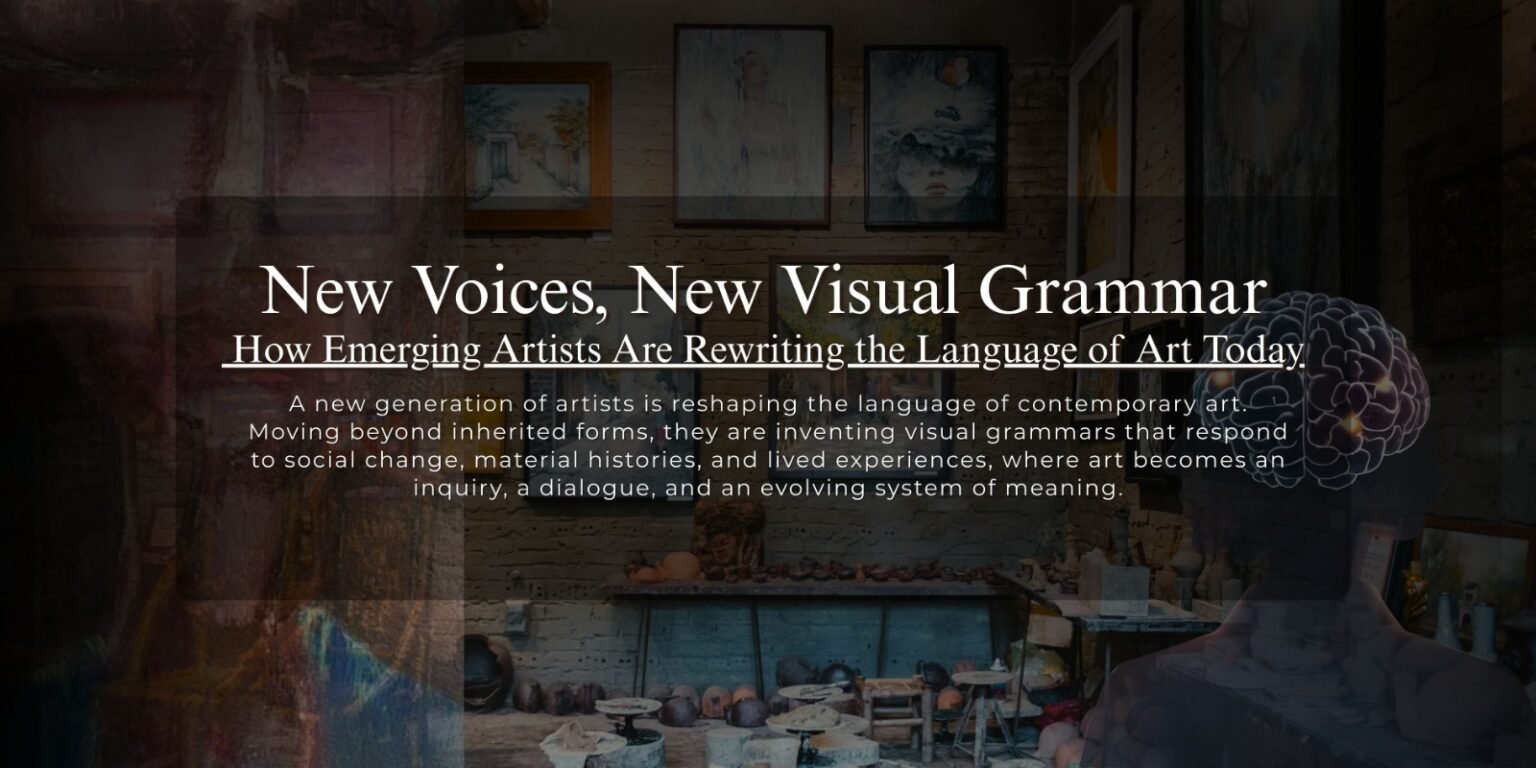

In the rapidly shifting landscape of contemporary art, a distinctive transformation is underway. A new generation of artists, rooted in diverse cultural contexts, interdisciplinary methodologies, and sociopolitical urgency, is actively rewriting the visual grammar of art. No longer confined to traditional modes of representation, emerging voices are redefining what art looks like and how it communicates meaning. Their practices traverse material experimentation, genre-bending, participatory form, and conceptual innovation, contributing to expansive dialogues about identity, place, ecology, and the very purpose of artistic engagement in our time.
Emerging Platforms and New Conversations
In India, platforms such as IMAGINARIUM 5.0 and Emerging Palettes.15 provide crucial institutional visibility for younger artists, enabling them to enter broader national and global conversations. These exhibitions assemble work by recent art school graduates who use non-traditional materials, wood, textiles, found objects, and inventive conceptual frameworks that challenge the primacy of painting and sculpture alone. Their practices reflect a generational shift toward art as discourse and material inquiry, not merely as an object.
Such platforms underscore how emerging practitioners are expanding the field by embracing hybridity, combining craft, installation, sound, performance, and conceptual writing into unified practices. In Emerging Palettes.15, for instance, artists probe the narrative potential of textiles and reclaimed materials, framing sensory experience as not only aesthetic but political and ecological.
Redefining Materiality and Medium
Emerging artists today often foreground materiality as a message. Rather than privileging painting or classical media, they interrogate what materials can do, how they carry histories, mnemonic weight, or environmental resonance. In Gujarat, emerging painter and abstract artist Vipin Singh Rajput manipulates textiles, ash, jute, copper wire, thread, and charred paper in works that transcend surface aesthetics to become meditative dialogues with presence and absence. His blending of unconventional materials creates visceral tensions between fragility and endurance, signalling a shift from representation toward material narrative systems.
This trend aligns with broader global artistic practice that recognizes material, whether textile, metal, or found objects, as a co-author in visual grammar, capable of conveying sociocultural and affective meaning beyond symbolic representation.
Interdisciplinary and Participatory Modes
A second key dimension of this new visual grammar lies in interdisciplinary practice. Emerging artists are less defined by medium than by method, shifting fluidly between painting, installation, performance, video, and digital platforms. These hybrid forms disrupt hierarchies between high art and everyday practice,” inviting audiences to engage with art not as detached observers but as participants.
Globally, this trend is evident in participatory installation works and immersive environments that foreground viewer presence, bodily engagement, and relational dynamics within the artwork. Artists like Mary Peng, whose generative and responsive installations at events such as the 2025 Venice Architecture Biennale used motion and perception to shape visual experience in real time, exemplify how emerging practices extend visual grammar into experiential and interactive domains.
Narratives of Identity and Socio-Political Consciousness
For many emerging artists, visual grammar is inseparable from questions of identity, memory, and social justice. Exhibitions across India, such as Blueprint: What Lines Say in Chandigarh, bring together masters and emerging artists in dialogue, foregrounding how shaping line and form can be a vehicle for nuanced, multilayered commentary.
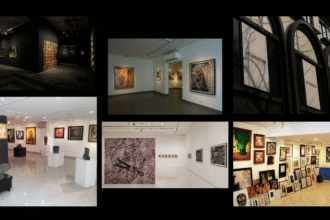
Similarly, contemporary solo and group shows often highlight work that interrogates the conditions of lived life exploring urban change, post-colonial legacies, gendered experience, and ecological fragility through nuanced visual strategies. These practices aim to reconfigure traditional narratives about nations, landscapes, and interpersonal histories, often reclaiming visual discourse from entrenched power structures.
Across Geographies: A Global Pulse
While Indian art spaces reflect one vibrant node in this global shift, other regions show parallel evolutions. International art news highlights practices that embody new vocabularies of form and experience. For example, Danish-born artist Eva Helene Pade’s figurative painting extends movement and distortion into a visual dialect that unsettles representational certainty while capturing emotional resonance. Her work has found institutional attention in European galleries, illustrating how emerging voices push figuration and abstraction into new expressive terrains.
Similarly, artists recognized in major awards, such as Nnena Kalu, winner of the 2025 Turner Prize reveal how novel material combinations and symbolic abstraction can draw robust critical recognition. Kalu’s cocoon-like sculptures and vortex drawings, made from rope, fabric, and unconventional media, showcase how textural complexity and formal invention can generate new artistic grammar that speak to identity, affect, and materiality.
Emerging Digital and Technological Languages
Beyond conventional media, digital and algorithmic processes have expanded visual grammar in compelling ways. Technology’s role in art, whether through blockchain, NFTs, or generative coding, introduces languages of pattern, repetition, and real-time transformation. These languages are not limited to techno-formal aesthetics; they engage questions of ownership, authenticity, and participatory culture, reshaping how art is produced, distributed, and experienced globally.
Emerging artists are at the forefront of this confluence, embracing digital creation as a collaborative and generative field where algorithmic processes serve as creative partners rather than tools, a development that portends even more pronounced shifts in visual grammar.
Towards a New Visual Lexicon
What unites these divergent practices is a commitment to expanding the expressive potential of art. Rather than adhere to inherited categories, painting, sculpture, or video, emerging artists synthesize form, content, and idea into fluid grammars that resist singular definitions. Their work reflects an epoch of complexity, where global circulation, hybrid identity, ecological urgency, and technological integration challenge established norms.
In this emergent milieu, art becomes less a static object and more a dynamic node of conversation, where meaning is co-produced by creators, audiences, institutions, and contexts. Young artists are not merely responding to precedents; they are reconfiguring the parameters of expression, asking not only “what does art look like?” but “how can art think, act, and intervene?”
Redefining the Language of Art
The contemporary moment in art is characterized by plurality, hybridity, and innovation. Emerging voices are not merely the future of art; they are its present. Through material experimentation, interdisciplinary practice, participatory engagement, and digital integration, these artists are writing new grammars, systems of visual language that articulate the complexities of lived experience, collective memory, and socio-cultural transformation.
As these practices gain visibility in exhibitions, biennales, and digital platforms, they signal a broader shift in how art is made and understood: a shift toward responsive, relational, and radically inclusive modes of creation. In doing so, they affirm that the language of art is always evolving, open to reinvention, and rich with possibilities yet to be imagined.