

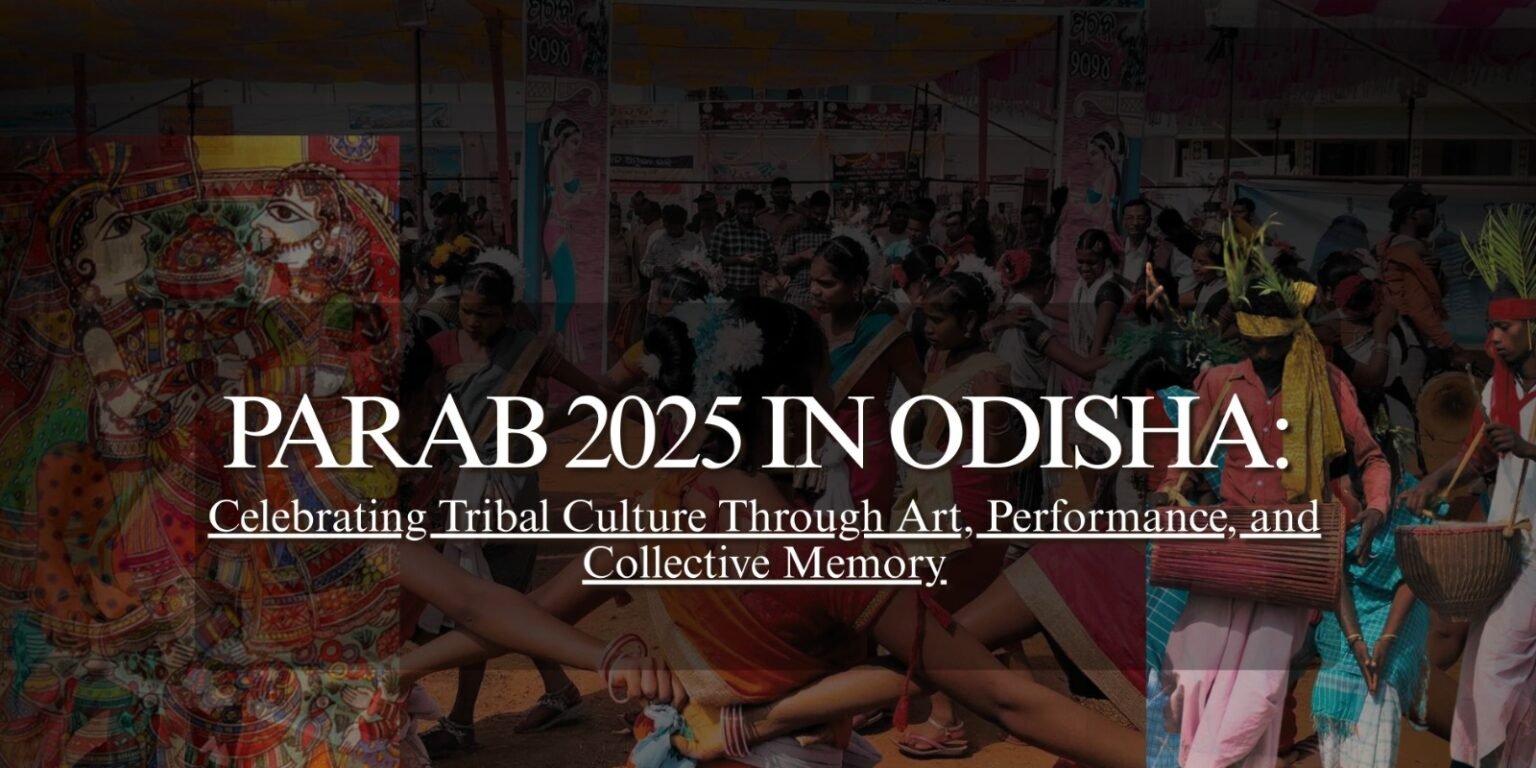

In the lush, undulating landscapes of the Koraput district in southern Odisha, the annual tribal festival Parab 2025 unfolded as a spectacular affirmation of Indigenous heritage, artistic expression, and communal memory. Held from December 18 – 22, 2025, this five-day celebration has come to represent more than a mere cultural event; it is an enduring site of identity formation, artistic exchange, and socio-economic engagement for tribal communities in the region and beyond.
A Festival Rooted in Life and Tradition
Parab’s origins lie deep within the seasonal rhythms and social fabric of Koraput’s tribal societies, which encompass groups such as the Bonda, Gadaba, Paroja, Kondh, and Saora, among others. Traditionally associated with the culmination of the agricultural cycle, the festival embodies gratitude to nature, expressions of communal solidarity, and sustained practices of performance, craft, and music that have been transmitted across generations.
Though Parab has existed in various forms for decades, over the years it has transformed into a premier national tribal festival, drawing thousands of visitors from across Odisha, neighbouring states, and even international cultural tourists. Koraput’s grounds have become a stage where Indigenous cosmologies and contemporary artistic sensibilities converge, offering audiences an immersive encounter with tribal lifeways that defy reductive Orientalist or tourist imaginaries
Ritual, Rhythm, and Reclamation
The opening ceremonies of Parab 2025 were marked by the rhythmic cadence of traditional drums and the vibrant spectacle of the Dhemsa dance, a signature performance deeply embedded in Koraput’s Indigenous expressive repertoire. With men and women clad in colourful handwoven attire, the dance is both a performative embodiment of collective joy and an emblematic assertion of tribal cosmology, where movement and sound carry ancestral memory into the present moment.
Folk songs woven into the festival’s soundscape narrate themes of ancestry, migration, ecological attunement, and survival, preserving oral histories that otherwise risk marginalization in dominant cultural narratives. By foregrounding embodied cultural expression, Parab maintains practices that articulate a distinct ontology of life – one shaped by forests, waterways, and the relational presence of human and non-human worlds
Artistic Diversity and Cultural Exchange
While the performance stage remained central, Parab 2025 also offered a broad spectrum of artistic engagements. Exhibitions of tribal art, metalcraft, paintings, and local cuisine dotted the festival grounds, providing tangible interfaces for tradition and innovation to meet. These displays served not only as aesthetic attractions but as repositories of ancestral knowledge, where craft techniques and artistic idioms articulate histories of ecological knowledge, material cosmology, and lived experience rooted in specific landscapes.
The event’s growing stature was reflected in the participation of more than 500 artists, including performers drawn from Odisha’s hinterlands and other states. Such plurality allowed for dialogues across regional tribal expressions, enhancing cultural exchange while foregrounding the diversity of Indigenous India’s artistic languages.
Economic Dimensions and Community Empowerment
Parab’s significance extends beyond performance and ritual; it also functions as a site of economic agency and community empowerment. The festival’s increasing visibility has catalysed opportunities for local artisans and self-help groups to engage with broader markets. Handcrafted textiles, traditional jewellery, metalwork, and culinary products are showcased and sold, reinforcing the festival’s role as a living marketplace of tangible heritage.



Government officials and regional leaders have underscored Parab’s strategic value as a cultural platform that supports sustainable development while celebrating heritage. Public visibility and tourism inflows have translated into economic avenues that enable tribal communities to negotiate value on their own terms, challenging narratives that historically positioned Indigenous cultures as peripheral to national cultural discourses.
Mapping Culture and Identity in Contemporary India
Scholars of tribal performance and cultural festivals emphasize that events like Parab operate as dynamic crucibles where tradition and modernity intersect, and where Indigenous epistemologies are articulated as living rather than static phenomena. In this light, the festival becomes a modality of cultural continuity and adaptive innovation, one that reinforces communal resilience while engaging with global audiences.
Rather than packaging tribal cultures as static or exoticized artifacts of a distant past, Parab reveals a complex choreography of identity, wherein music, dance, craft, and ritual enact contemporary articulations of belonging. These expressions articulate a rootedness in place that resists homogenizing tendencies of cultural commodification, reflecting instead a relational worldview that binds people to land, lineage, and collective memory.
Between Preservation and Transformation
The expansive nature of Parab 2025, its integration of performance, craft, gastronomy, and sport, attests to how cultural festivals can mediate between heritage preservation and adaptive renewal. Mountain trekking events, exhibitions, and competitive activities, such as those held at Kalia Mali Hill under the festival’s auspices, demonstrate that tribal cultural celebration is not monolithic but multifaceted, engaging people of all ages and backgrounds in affirmations of community identity.
In a period marked by rapid socio-economic transformation in India’s hinterlands, Parab asserts that culture is not a static repository but a continually negotiated process of becoming. For young participants, especially, the festival is an occasion of pedagogical significance, recasting inherited practices into frameworks of contemporary visibility and creative possibility
A Festival of Memory, Movement, and Becoming
Parab 2025 stands as a testament to the enduring vitality of tribal artistic expression in India’s cultural topography. It reaffirms that Indigenous traditions are not relics of a bygone era but living, breathing forms of knowledge that inform how communities navigate history, ecology, and collective future. Through its rich tapestry of dance, song, craft, and conviviality, Parab reasserts the importance of cultural festivals as sites of empowerment, exchange, and shared humanity.