






India’s airports are rapidly evolving from functional transport hubs into living art galleries, showcasing the country’s rich artistic heritage and contemporary creativity. Modern travellers passing through Delhi, Bengaluru, Mumbai, Hyderabad, and Chennai can now experience public art installations, monumental murals, and sculptures that reflect regional culture, history, and craftsmanship.From iconic murals to intricate sculptures and curated cultural exhibits, Indian airports are becoming global destinations for art lovers, blending architecture, design, and creativity in ways rarely seen elsewhere.
Indira Gandhi International Airport, Delhi
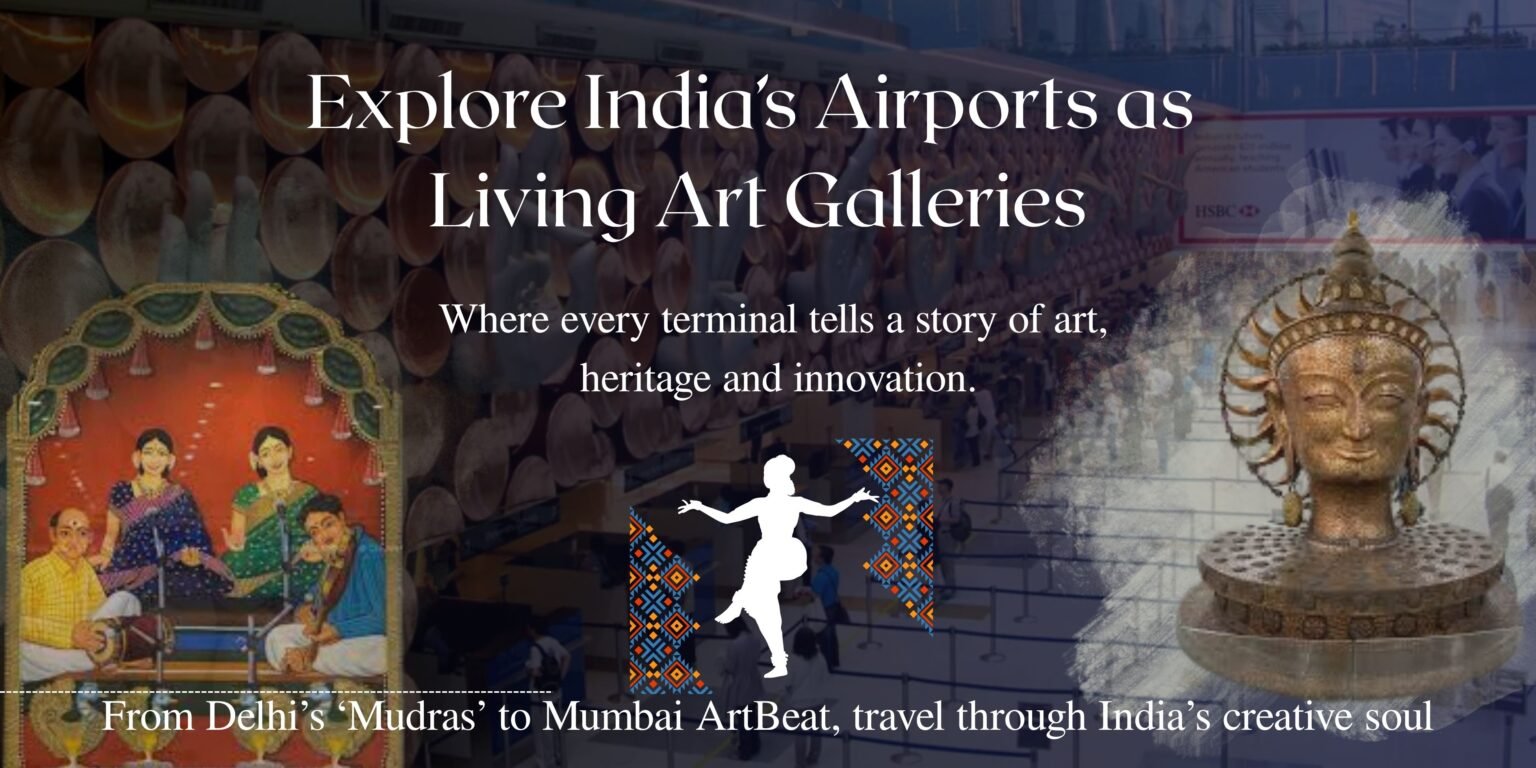
IGI Airport in Delhi is India’s largest airport and a stunning example of how airport design can integrate art and culture. Terminal 3 welcomes travellers with a 12-foot bronze statue of Surya God by Satish Gupta, symbolizing vitality, energy, and India’s mythological heritage.A highlight is “The Indian Odyssey”, an 850-foot-long mural by Paresh Maity, one of the longest paintings in India. This masterpiece celebrates India’s cultural diversity through vivid colours and intricate storytelling, offering passengers a visual journey before they even board their flights.Additionally, the mudras installation by Ayush Kasliwal’s team, showcases nine hand gestures significant to Hinduism, Buddhism, classical dance, and yoga, adding a meditative element to the bustling terminal.
Kempegowda International Airport, Bengaluru
Kempegowda International Airport captures the essence of Karnataka’s culture through both architecture and public art. A 200-foot mural by Jatin Das, created in 2014, brings warmth, motion, and color to the airport interiors, merging contemporary aesthetics with traditional themes.Terminal 2 features “Past Continuous” by Shanthamani Muddhaiah, Santosh P, and Shakeel Ahmad. This installation reflects Bengaluru’s evolving identity, using recycled materials to recreate traditional weaving looms. It highlights the synergy of sustainability, local craft, and artistic innovation in modern airport design.
Rajiv Gandhi International Airport, Hyderabad
Hyderabad’s airport is a space where travellers can experience a moment of reflection through art. The AIRAVAS installation by artisan Anjannappa features Airavat, the majestic white elephant of Lord Indra, and Uchchaihshravas, the seven-headed horse, symbolizing speed and nobility.This installation not only represents Telangana’s heritage but also exemplifies how public art in Indian airports connects travellers to local mythology and cultural identity.
Chhatrapati Shivaji Maharaj International Airport, Mumbai
Mumbai’s Terminal 2 hosts ArtBeat of New India, one of the world’s largest airport art programs, spanning a 3.2-kilometer corridor. The terminal features over 5,500 artifacts and 100+ installations, including:
- “Atelier of Ephemera” by Rajeev Sethi
- “Conjoining Lands” by Nilima Sheikh and B.V. Suresh
- “Moving Constant” by N. Ramachandran and V. Anamika
- A late 19th-century ornamental chariot
Mumbai Airport exemplifies how airports can act as immersive art museums, offering travellers a daily encounter with India’s rich cultural and artistic heritage.
Chennai International Airport
Chennai Airport transforms Terminal 2 into a vibrant showcase of Tamil Nadu’s artistic traditions. The airport features AVSAR outlets, promoting local craftsmanship, and a Tanjore-inspired mural that captivates with its use of gold foil, gems, and vivid colours.This mural serves as a modern homage to centuries-old Tanjore painting techniques, merging travel with art, tradition, and cultural storytelling. Travelers leave with more than memories—they carry a visual experience of southern India’s creative legacy.
How Indian Airports Are Redefining Public Art
Airports in India are redefining the way public art interacts with large-scale spaces. They provide a platform for contemporary artists while promoting regional craftsmanship and heritage. Large-scale murals, sculptures, and installations ensure that airports are more than transit points—they are cultural gateways.



Benefits of art in airports
- Enhances passenger experience and reduces travel stress
- Serves as a platform for Indian artists to reach global audiences
- Promotes regional culture and heritage
- Introduces travellers to sustainable and innovative art forms
Airports like IGI Delhi, Mumbai, and Bengaluru illustrate the power of integrating art, architecture, and storytelling in public spaces, turning mundane waiting areas into enriching cultural experiences.
Conclusion: Traveling Through India’s Artistic Landscape
India’s major airports are more than transportation hubs—they are living art galleries, celebrating history, culture, and contemporary creativity. From IGI Delhi’s Surya statue and 850-foot mural to Mumbai’s ArtBeat corridor, Bengaluru’s Jatin Das masterpiece, Hyderabad’s AIRAVAS, and Chennai’s Tanjore-inspired mural, each airport is a cultural landmark in its own right.
Travelers can now explore India not only through its destinations but also through its airport art, making journeys richer, inspiring, and memorable.