



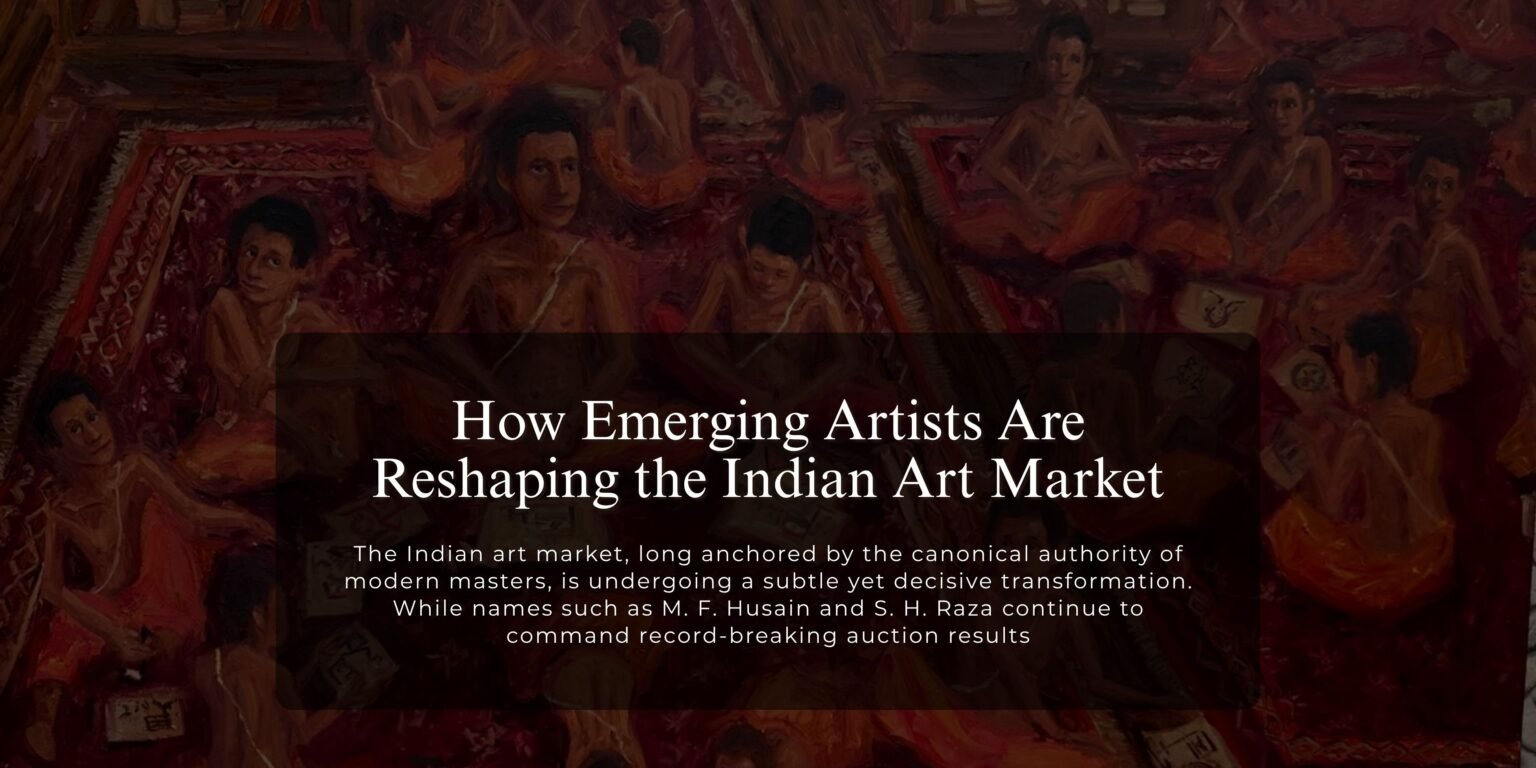

The Indian art market, long anchored by the canonical authority of modern masters, is undergoing a subtle yet decisive transformation. While names such as M. F. Husain and S. H. Raza continue to command record-breaking auction results, a new generation of emerging artists is steadily recalibrating the contours of value, visibility, and engagement. This shift is neither abrupt nor disruptive in the conventional sense; rather, it is cumulative, driven by changing collector demographics, evolving institutional frameworks, and the expansion of artistic media. In effect, emerging artists are not merely entering the market; they are reshaping its very logic.
One of the most significant developments lies in the diversification of the collector base. Historically, Indian art collecting was dominated by a relatively small circle of established patrons, often guided by notions of legacy and long-term investment. In recent years, however, there has been a marked influx of younger, first-time buyers, many of whom are drawn to emerging artists for both economic and ideological reasons. Lower price points make entry into the market more accessible, while the thematic immediacy of contemporary practices resonates with a generation attuned to questions of identity, ecology, and global interconnectedness. As noted in recent market analyses, this surge in younger collectors has been instrumental in driving demand for emerging art across galleries and fairs.
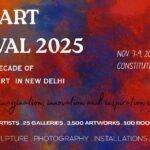
This shift is particularly evident in platforms such as the India Art Fair, which has increasingly foregrounded emerging practices. The fair’s recent editions have not only expanded in scale, hosting a record number of galleries and institutions, but have also actively curated sections dedicated to new voices. The presence of emerging artists is no longer peripheral; it is central to the fair’s identity. Galleries that once focused primarily on established names are now investing in younger talent, recognising both the market potential and the critical relevance of these practices.
Equally transformative is the way emerging artists are reconfiguring artistic language. Unlike earlier generations, whose practices were often shaped by the imperatives of nationalism or postcolonial identity, contemporary emerging artists operate within a more fluid, transnational framework. Their work frequently traverses disciplines, combining painting with digital media, installation, performance, and craft-based practices. Artists such as Sandeep Dhurve exemplify this hybridity, revitalising traditional forms like Gond art while addressing contemporary concerns such as environmental change and urbanisation. This synthesis of heritage and innovation not only expands the formal vocabulary of Indian art but also broadens its appeal across diverse audiences.
The role of alternative platforms and decentralised networks further amplifies this transformation. Beyond traditional galleries, emerging artists are increasingly leveraging art fairs, residencies, and digital platforms to reach audiences directly. Online marketplaces and social media have democratised visibility, enabling artists to bypass conventional gatekeepers and engage with collectors on their own terms. This shift has been particularly significant in tier-two and tier-three cities, where digital access has facilitated new forms of participation in the art market.
From a market perspective, this decentralisation introduces both opportunities and complexities. On one hand, it expands the ecosystem, creating multiple entry points for artists and collectors alike. On the other, it challenges traditional models of validation, which have historically relied on institutional endorsement and gallery representation. The emergence of artist-led initiatives, pop-up exhibitions, and collaborative platforms reflects a broader rethinking of how value is assigned and circulated within the market.
Economic factors also play a crucial role in this evolving landscape. The Indian art market has experienced significant growth in recent years, with total sales reaching approximately $183 million in 2023.This expansion has been accompanied by increased investor interest, greater global visibility, and the maturation of auction and gallery infrastructures. Within this context, emerging artists occupy a strategic position: they represent both the future of artistic production and a relatively accessible segment of the market for new collectors.
However, this growth is not without its disparities. While top-tier modernists continue to dominate high-value auctions, emerging artists often operate within more precarious economic conditions. The gap between primary and secondary markets remains pronounced, and the monetisation of emerging practices can be uneven. Yet it is precisely within this tension that new models of engagement are being forged. Galleries are increasingly adopting mentorship-driven approaches, investing in the long-term development of artists rather than focusing solely on immediate sales.

Institutional support, too, is evolving in response to these shifts. Museums, biennales, and cultural organisations are beginning to recognise the importance of nurturing emerging talent, incorporating younger artists into their programming and collections. This institutional validation not only enhances visibility but also contributes to the long-term sustainability of artistic practices.
From an art advisory and consultancy perspective, the rise of emerging artists necessitates a recalibration of strategy. The evaluation of emerging practices requires a different set of criteria, one that prioritises conceptual rigour, innovation, and trajectory over established market benchmarks. Advisors must engage with studios, follow exhibition histories, and assess the broader cultural relevance of an artist’s work. This approach moves beyond speculative acquisition, positioning collecting as a form of intellectual and cultural engagement.
Perhaps the most profound impact of emerging artists lies in their ability to redefine the narrative of Indian art itself. By introducing new themes, mediums, and modes of engagement, they challenge the dominance of established canons and open up space for alternative histories and perspectives. Their work reflects a contemporary India that is plural, dynamic, and globally connected, yet deeply rooted in local contexts.
In this sense, the influence of emerging artists extends beyond the market. It reshapes how art is produced, circulated, and understood. It compels galleries, institutions, and collectors to reconsider their roles within an evolving ecosystem. And it underscores a fundamental truth: that the vitality of any art market lies not in its past achievements, but in its capacity to nurture and sustain new voices.
For those engaged in art advisory, consultancy, and representation, this moment presents both a challenge and an opportunity. To recognise the significance of emerging artists is to invest not only in individual careers but in the future of Indian art itself. The market, in responding to these shifts, is not merely expanding, it is being redefined.