




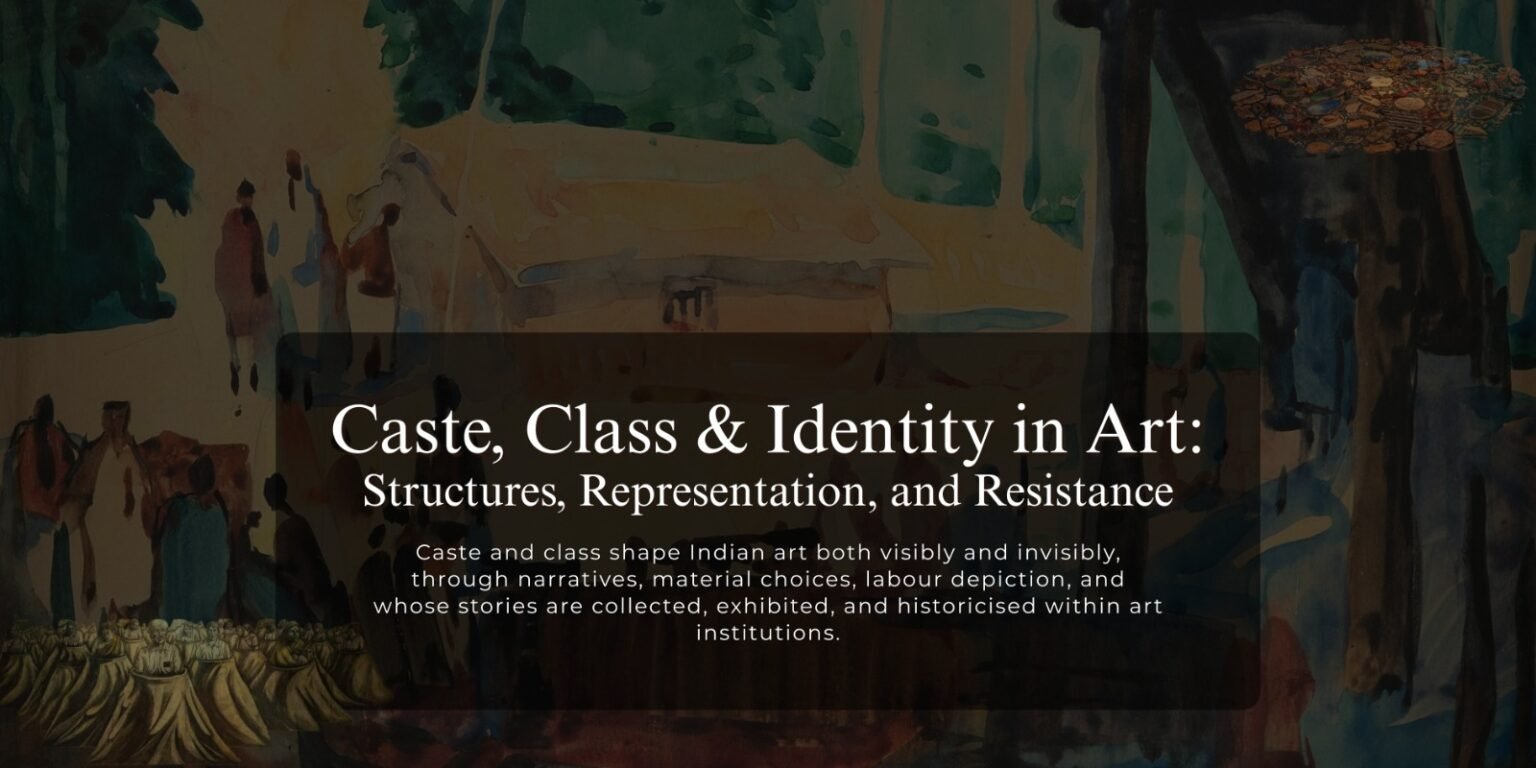

The entanglement of caste and class in Indian society is not merely a social fact; it is a living grammar shaping access, recognition, and meaning in cultural production, including the visual arts. In a country where caste hierarchies have been institutionally entrenched for millennia and class distinctions have deepened under colonial and neoliberal economies, artistic representation both reflects and refracts these intersecting structures. Understanding how caste and class inform artistic identities, opportunities, and narratives is essential for any rigorous critique of Indian art history and contemporary practice.
Caste and Class: Conceptual Foundations
Sociologically, caste in India refers to a birth-based, hereditary system of social stratification, traditionally organized around ritual hierarchies of purity and occupation. These groupings, often described as jāti, historically assigned individuals to specific social roles, limiting mobility and shaping community identity. Caste distinctions persist in everyday social life, governing not only community interactions but access to resources, education, and labor markets. In contrast, class denotes economic stratification based on control over material resources, income, and cultural capital, a system more dynamic but often overlapping with caste realities in India. Classic sociological scholarship reveals how class and caste cannot be analytically isolated; caste shapes opportunities for economic advancement, while class conditions influence how caste identities are experienced in urban and formal sectors.
In Weberian sociology, caste is regarded as a form of status distinct from class, yet in practice in India, the two remain deeply intertwined: caste frequently determines access to education and professional networks, and class often mediates caste’s visibility, especially in urban and elite contexts.
Historical Exclusions and Art Education
The colonial and postcolonial history of Indian art institutions demonstrates the exclusionary logics of caste and class. During the early 20th century, formal art schools in major Indian cities were largely accessible only to higher-caste, upper-class students who possessed the cultural capital and economic means to participate. Marginalized caste groups were systematically excluded from such training and from the networks that art education conferred. Critics argue that the very contours of India’s modernist art institutions and aesthetic values were shaped within a Brahmanical and class-privileged context, where certain artistic idioms became synonymous with cultural legitimacy.
This structural exclusion played out not only in admission to art schools but in the framing of art histories and curatorial canons that seldom recognized caste as a category of artistic identity. As a consequence, artists from oppressed caste groups were either excluded from the narrative or assimilated into a generic “subaltern” category that erased the specificity of caste experience.
Dalit Art and Counter-Narratives

Amid such systemic invisibilization, Dalit artists and scholars have foregrounded the necessity of a distinctive Dalit aesthetic and visual culture, not merely as representation but as political assertion. Dalit art, whether in painting, graphic narrative, or performance, frequently articulates histories of oppression, resistance, and community resilience that conventional art histories have marginalized.
Illustrative of this trajectory is Bhimayana: Incidents in the Life of Bhimrao Ramji Ambedkar (2011), a graphic biography created by Durgabai Vyam and Subhash Vyam with Srividya Natarajan and S. Anand. Drawing on Gond visual traditions, this work literalizes experiences of caste discrimination recorded by Ambedkar, conveying them through symbolic imagery that evokes both violence and resistance. Bhimayana represents a vital intervention in art’s capacity to narrate caste memory, reframing autobiographical testimony through indigenous aesthetics.
Contemporary practitioners like Savindra Sawarkar also embody this intersection of art and identity politics. His expressionist canvases confront caste oppression and untouchability through potent symbolism, deploying color and form to evoke generational trauma and social exclusion. Sawarkar’s work resists dominant aesthetic categories by embedding his Dalit identity into the formal and conceptual dimensions of his art, challenging the normative invisibility imposed by upper-caste curatorial frameworks.
Similarly, artists such as Malvika Raj, working within traditional Madhubani modes, subvert canonical boundaries by using folk idioms to articulate caste-rooted experiences and histories. Raj’s refusal to adopt only Brahmanical iconographies, a refusal shaped by lived encounters with caste discrimination, illustrates how caste consciously informs artistic choices and imagery.
Class, Economic Access & Artistic Trajectories
Caste and class intersect not only in the content of art but in the economic structures that sustain artistic careers. Access to capital, galleries, residencies, and markets is profoundly influenced by class position. Higher-caste artists historically enjoyed greater access to elite networks and patrons; conversely, artists from lower castes or working-class backgrounds often lacked the economic and social capital to penetrate institutional structures.
Randeep Maddoke’s photographic documentation of caste and class struggle in Punjab, Haryana, and Tamil Nadu exemplifies how working-class realities inflect artistic practice. Maddoke’s work, which foregrounds life on the margins, speaks to the inextricability of caste discrimination and material precarity.
Beyond individual careers, class status also conditions how art is consumed and valued. The contemporary art market privileges artists whose works can be objectified as high value, often sidelining socially engaged practices that resist commodification. Thus, class functions as both a mode of economic stratification and an aesthetic filter in the valuation of artistic labor.
Representation, Erasure, and New Discourses
The politics of representation in Indian art cannot be divorced from caste politics. Dalit art has often been subsumed under broader categories such as subaltern or outsider art, a categorization that risks erasing the specificity of caste as a formative axis of identity and experience. Critics argue that without acknowledging caste as a central category, conventional art histories fail to account for how power structures shape visibility and legitimacy.
As scholars emphasize, representation must be understood not as a neutral act but as a dialectical process between presence and absence, visibility and blindness. This reorientation compels art institutions to question entrenched hierarchies of value and to examine the asymmetrical power relations that have historically structured Indian art discourses.
Towards an Inclusive Art History
Addressing the twin forces of caste and class in art requires not only expanding the canon to include marginalized voices but also rethinking the very frameworks through which art is interpreted, exhibited, and circulated. It calls for an art history that recognizes structural inequalities as constitutive of aesthetic identity and for critical practices that foreground lived experience as central to visual meaning.
In an art world increasingly attentive to questions of identity and justice, the intersection of caste, class, and art offers both profound challenges and rich opportunities. To engage these issues seriously is to acknowledge that artistic expression is not only a matter of individual genius but also a reflection of social conditions, conditions that must be interrogated, understood, and transformed.