




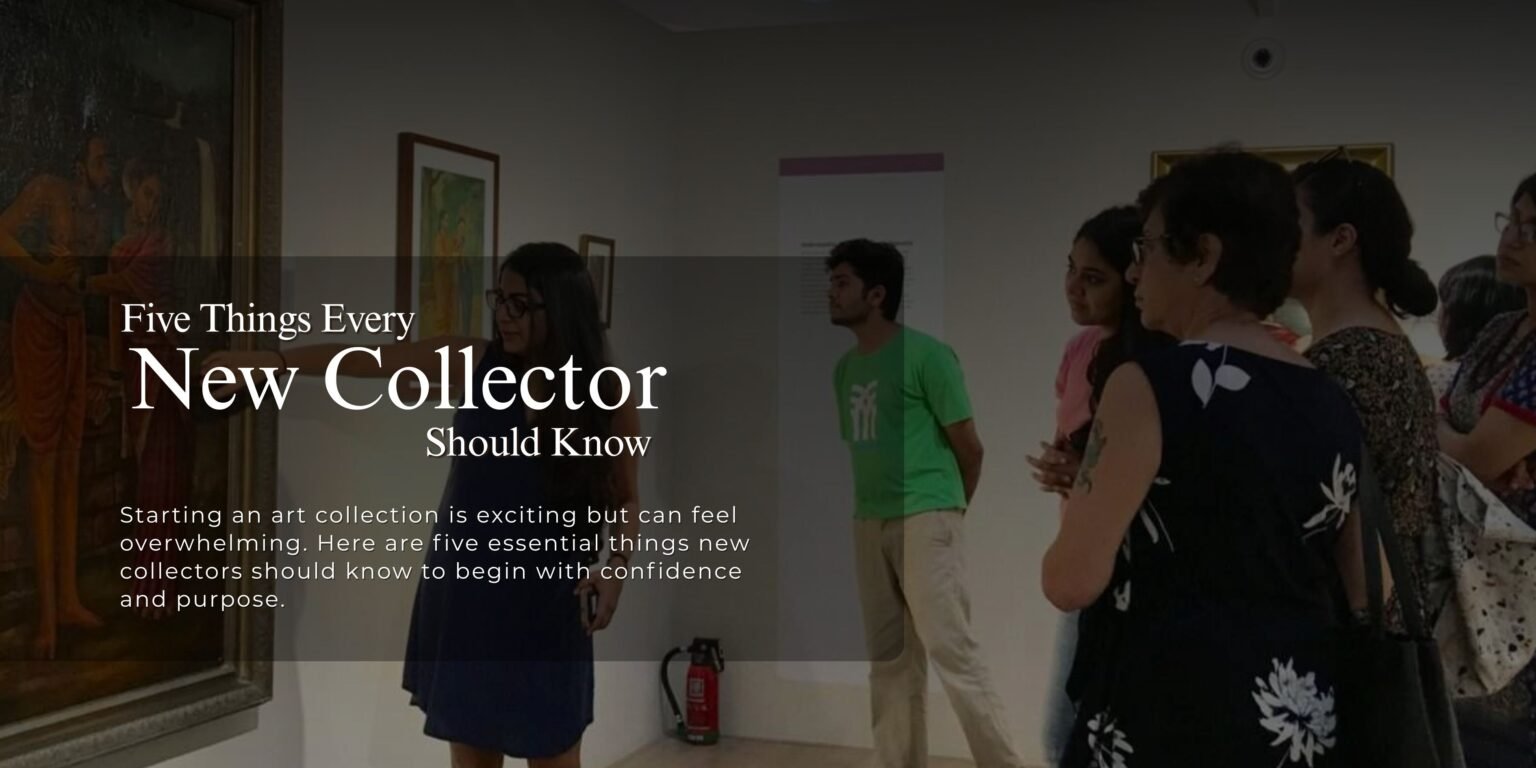

Entering the world of art collecting can be exhilarating and daunting in equal measure. For those beginning this journey, the landscape of galleries, auctions, fairs, and private sales is both richly textured and, at times, opaque. At its best, collecting art is not merely an act of acquisition but an ongoing dialogue with culture, history, and personal taste. At its worst, it can be fraught with market illusions, haste, and missteps that obscure both aesthetic judgment and financial prudence. Informed, reflective, and disciplined practice is therefore essential. The following five considerations are foundational for new collectors seeking to navigate this complex field with clarity and confidence.
1. Define Your Taste and Collect What Matters to You
The most enduring collections are rooted in personal conviction rather than transient market trends. Advisors consistently emphasise that beginning with art that genuinely resonates, emotionally, intellectually, or aesthetically, establishes a strong foundation for a meaningful collection. One seasoned commentator writes that art should be chosen according to individual taste, not popular opinion or perceived investment value, because personal connection fosters sustained engagement with the work over time.
This principle serves a dual purpose. First, it protects the collector from the volatile whims of trends that can quickly dissipate. Second, it encourages the development of a coherent collecting strategy, a narrative thread that can unify disparate works into a collection that reflects a distinct vision and purpose.
2. Educate Yourself About Art and the Market
Artistic literacy and market literacy are both indispensable. A nascent collector should approach art with curiosity and humility, absorbing knowledge through museum visits, gallery exhibitions, art fairs, specialist publications, and conversations with artists, dealers, and curators.
India
Understanding historical movements, material practices, and critical discourse enriches aesthetic appreciation and contextualises a work within broader cultural narratives. Simultaneously, familiarity with market dynamics, including price records, auction results, and secondary market behaviour, enables informed decision-making. Online databases such as Art Price and Artnet, for example, can help collectors benchmark prices and identify market patterns.

A well-educated collector is better positioned to distinguish between substance and spectacle and to evaluate not only what a work means but also its broader significance within the art ecosystem.
3. Establish a Budget and Respect It
Art collecting invites a wide range of financial engagement, from modest beginnings to substantial investment. Yet, irrespective of budget size, financial discipline remains central. Defining a realistic budget before buying ensures that collecting remains sustainable, avoids impulsive acquisitions, and aligns purchases with long-term goals.
It is worthwhile to remember that acquisition cost is only one component of ownership; framing, transportation, insurance, and conservation add to the long-term cost of collection care. In setting a budget, new collectors should consider these ancillary expenses as integral to the collecting process rather than optional add-ons.
Prudent budgeting also encourages collectors to explore diverse price points. Emerging artists’ works, limited edition prints, and smaller works can be rewarding and accessible entry points into the market.
4. Prioritise Authenticity, Provenance, and Documentation
At the heart of collecting lies the question of authenticity. Owning a work by a specific artist entails not only aesthetic appreciation but also trust in the legitimacy of that work’s attribution. Authenticity safeguards both aesthetic and financial value, ensuring that the piece is genuinely created by the artist and supported by verifiable documentation.
Provenance, the history of ownership, is equally crucial. It does more than confirm a work’s legitimacy; it enriches its narrative, situating it within exhibition histories, institutional collections, or notable ownership. Provenance can materially influence market valuation and buyer confidence.
In an era where sophisticated forgeries and fraudulent documentation have escalated, particularly with the advent of new technologies, vigilance is essential. Industry professionals have reported instances where artificial intelligence has catalysed the fabrication of convincing but false provenance and authenticity documents, thereby complicating traditional mechanisms of verification.
New collectors should therefore demand certificates of authenticity, condition reports, and clear provenance from reputable sources and engage experts when necessary. These measures are not merely bureaucratic; they are safeguards that uphold the integrity of collecting.
5. Consider Relationships and Long-Term Care
Collecting art is as much about relationships as it is about acquisitions. Cultivating dialogues with artists, gallery owners, advisors, and fellow collectors can open doors to opportunities that extend beyond transactional encounters. Networks provide access to private views, early releases, and insider insights that can shape a collection’s trajectory.
Moreover, collectors should anticipate the long-term care and conservation of their works. Proper storage, climate control, and specialist handling preserve condition and aesthetic impact over time. This stewardship not only protects financial value but also honors the cultural and historic significance of each object.
Effective documentation practices, including detailed records of acquisition, exhibition history, and condition, become invaluable as a collection grows. Such documentation supports insurance needs, estate planning, and catalogue raisonnés, contributing to the collection’s legacy.
Collecting as Lifelong Inquiry
For the new collector, the art world can initially appear as a labyrinth of choices, signals, and uncertainties. Yet, when approached with deliberate thought, informed curiosity, and respect for the discipline’s complexities, collecting transcends mere possession. It becomes a lifelong inquiry into aesthetic values, cultural heritage, and personal resonance.
The five pillars outlined here, grounding taste in personal meaning, deepening knowledge, budgeting responsibly, safeguarding authenticity, and nurturing relationships, equip collectors not merely to buy art but to steward it with purpose and insight. In doing so, they contribute to the art world not only as patrons but as thoughtful custodians of visual culture.