




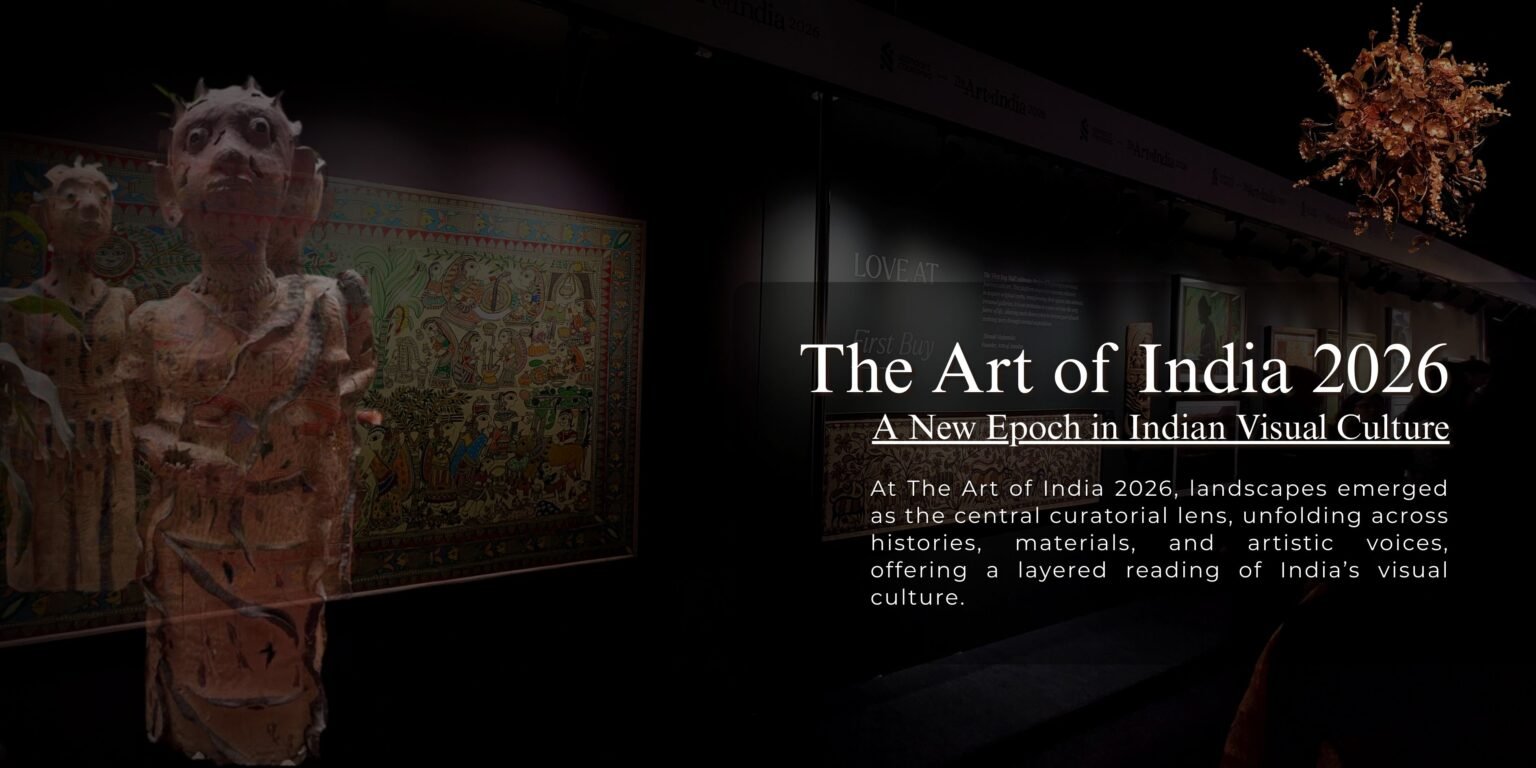

When one speaks of India’s contemporary art landscape in the year 2026, The Art of India emerges as a defining cultural milestone. Previewed at the start of January, this ambitious exhibition, co-organized by The Times of India and Standard Chartered Bank, signals a renewed commitment to showcasing the depth and breadth of Indian artistic expression. Spanning multiple cities and a spectrum of artistic idioms, The Art of India 2026 underscores the nation’s evolving aesthetic consciousness, bridging traditional heritage and contemporary innovation in a manner that resonates both locally and globally.
Genesis and Vision of The Art of India 2026
The Art of India 2026 stands apart from conventional art fairs or biennales. Rather than operating solely as a commercial marketplace, it is positioned as a cultural nexus that foregrounds Indian artistic traditions alongside modern and contemporary practices. Hosted initially at the India Habitat Centre (IHC) in New Delhi from January 10 to 18, 2026, it inaugurates the year with a comprehensive survey of Indian creativity.
The decision to partner with Standard Chartered Bank reflects an intent to blend cultural heritage with institutional support, emphasising both artistic quality and accessibility. In an era when India’s art market has grown substantively, exhibitions of this scale help contextualise artistic production within national narratives of identity, memory, and aesthetic evolution.
A catalogue associated with the event reveals “Adventures in the Magical Landscapes” as a thematic thread, suggesting an exploration of India’s visual terrains, both literal and metaphorical, that have inspired generations of artists.
A Multi-City Cultural Cartography
The Art of India is not confined to one urban centre. After New Delhi, the exhibition is scheduled to travel to Jaipur (February 14–22, 2026) and Mumbai (March 21–29, 2026) at the Chhatrapati Shivaji Maharaj Vastu Sangrahalaya (CSMVS).
This itinerant structure is significant for several reasons. Firstly, it decentralises the encounter with art away from a single metropolitan hub, responding to India’s vast and varied cultural geographies. Secondly, it introduces audiences in different regions to a curated cross-section of artistic practice that would otherwise require international travel to experience.
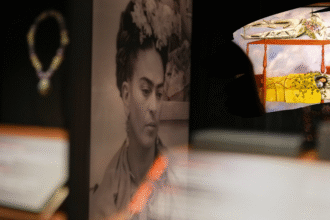
In each city, the exhibition’s programmes are tailored to local contexts. For instance, in Jaipur, an erstwhile capital of artistic patronage, the emphasis on cultural memory and heritage resonates with Rajasthan’s rich visual traditions. In Mumbai, the cosmopolitan energy of the city’s art ecosystem, anchored by institutions like CSMVS, provides fertile ground for dialogues between history and contemporary aesthetics.
Curatorial Framework: Tradition Meets Experimentation
Although The Art of India 2026 spans diverse geographies, its curatorial framework is coherent. The phrase “Adventures in the Magical Landscapes,” drawn from the catalogue, signals a thematic interest in how Indian artists interpret space, memory, and the physical environment through varied mediums.
This landscape is not merely topographical. It functions metaphorically, encompassing historical legacies, cultural imaginaries, and symbolic terrains that have shaped artistic expression in India for centuries. From early miniature traditions to modernist experiments, and from folk idioms to digital media, The Art of India frames the nation’s art as an ongoing conversation between past and present.
Importantly, the exhibition is not restricted to conventional painting and sculpture. By including a wide range of media, installation, mixed media, and conceptual art, it recognises the plural forms in which Indian artists articulate their worlds. This pluralism reflects a key shift in contemporary Indian art: away from singular narratives toward complex, layered discourses that resist easy categorisation.
Significance for Indian Art and Its Audiences
The Art of India 2026 holds significance on multiple levels. For one, it serves as a barometer of India’s artistic zeitgeist, encapsulating both heritage practices and forward-looking experimentation. In doing so, it engages audiences beyond traditional collectors and institutions, inviting the public into a wider appreciation of art’s cultural utility.
Within the professional art world, this exhibition enhances India’s visibility on the global stage. At a moment when Indian artists are increasingly part of international biennales, museum shows, and market circuits, homegrown initiatives like The Art of India provide a crucial platform to articulate national artistic priorities on domestic soil.
Moreover, its collaborative framework, bringing together media institutions like The Times of India with corporate partners, illustrates how public-private partnerships can strengthen cultural infrastructures. Such alliances are essential in an era when state patronage alone is insufficient to sustain expansive cultural programming.
Dialogue with Broader Cultural Currents
The Art of India does not exist in isolation. Its emergence is part of a broader cultural renaissance where major art events, including the India Art Fair and the Kochi-Muziris Biennale, amplify India’s artistic dynamism. These events collectively signal a maturing cultural ecosystem that values both local specificity and global conversation.
The exhibition also reflects a growing recognition of India’s artistic heritage as an asset in soft power dynamics. As Indian art gains greater visibility, exhibitions like The Art of India contribute to narratives that position the country as a centre for cultural innovation and philosophical depth.
Challenges and Future Horizons
Despite its promise, The Art of India 2026 must navigate several challenges. One is the perennial tension between commercial imperatives and curatorial integrity. While partnerships with financial institutions enable scope and scale, they also invite questions about market influence on artistic programming. The curatorial challenge lies in balancing market appeal with artistic risk and intellectual depth.
Another imperative is accessibility. For a nation as geographically and socio-economically diverse as India, ensuring that exhibitions reach audiences beyond elite cultural circuits remains a pressing concern.
Yet, as The Art of India moves from Delhi to Jaipur to Mumbai, it demonstrates an institutional willingness to address these concerns by decentralising access and foregrounding public engagement.
The Art of India 2026 represents a vital moment in India’s cultural calendar. It transcends the limitations of typical art fairs by offering a comprehensive, multi-city appraisal of Indian art’s historical depth and contemporary vitality. Through carefully curated presentations and thematic coherence, it positions Indian art as both heir to a rich visual past and a dynamic participant in global artistic dialogues.
For collectors, curators, scholars, and enthusiasts alike, The Art of India offers more than aesthetic consumption: it encourages reflection on the complex landscapes, both actual and imagined, that shape artistic production in South Asia today. Its significance will likely extend beyond its run, influencing the ways in which Indian art is understood, collected, and celebrated in the years to come.