






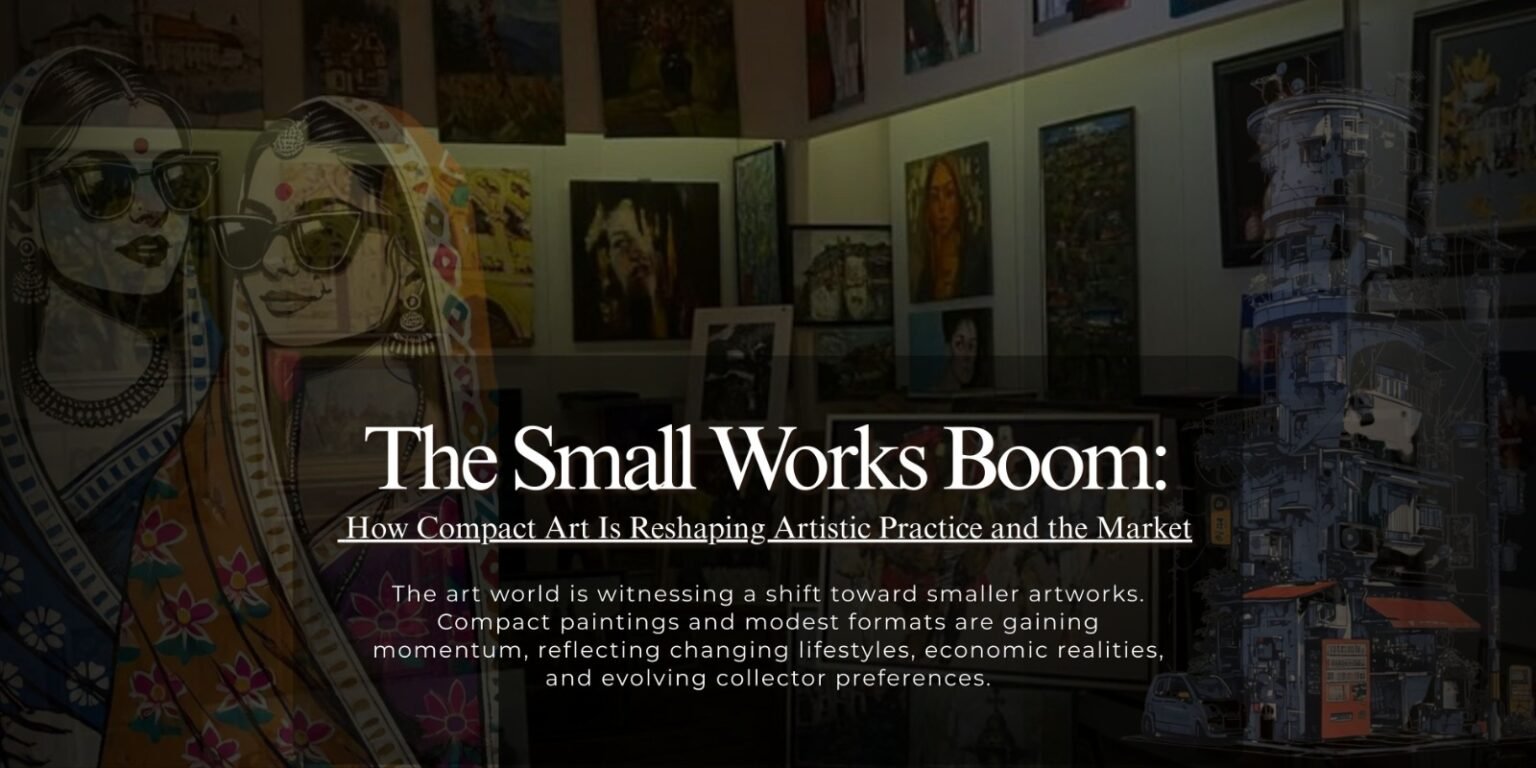

In the evolving architecture of the contemporary art market, a notable shift has emerged over the past few years, one that underscores not merely changing aesthetic preferences, but a reconfiguration of economic logic, spatial realities, and generational values. Increasingly, collectors, galleries, and artists are embracing small works, compact paintings, prints, and modestly scaled pieces, as a defining trend in art practice and commerce. This development signals far more than a stylistic preference; it encapsulates how contemporary life, particularly for younger collectors and urban dwellers, is reshaping the very conditions of artistic production and circulation.
A Market Defined by Accessibility and Scale
The art market has historically been bifurcated between monumental works associated with investment value and smaller formats seen as ancillary or preliminary. However, recent data reveal a structural recalibration within this binary. Notably, Artsy’s 2025 Buyer Trends reported that 40% of all purchases were for small works, with searches for “miniature and small-scale paintings” up 66% year over year. Searches for “small” across its platform increased nearly 49%, reflecting a pronounced shift in collector attention toward scaled-down art.
This ascendancy of small artworks aligns with broader market dynamics: in 2024 and 2025, works priced below $50,000 accounted for the majority of transactions, approximately 85% of dealer sales, and galleries with lower annual turnover reported growth in their offerings. These transactional patterns suggest that collectors are engaging the art market through manageable price points and sizes that correspond with their financial and spatial realities.
Generational and Spatial Realities
Urban living patterns have a significant bearing on current trends in art consumption. Younger collectors, including a growing cohort of Gen Z and millennial buyers, are more likely to reside in compact apartments or transient living situations where large canvases or oversized sculptures are impractical. Smaller works fit seamlessly into the daily fabric of these environments, offering both aesthetic presence and practical ease of display. Moreover, portability and lower shipping costs make compact pieces ideal for an increasingly mobile and digitally engaged collector base.
While spatial constraints are not new, the intensified demand for small artworks reflects changing values as much as circumstances. Younger collectors prioritize art that can be integrated into lived spaces without overwhelming them. This predisposition taps into a broader shift toward intimacy, personalization, and accessibility in art collecting, trends that dovetail with online ecosystems where ease of discovery, affordability, and immediate gratification are paramount.
Economic Implications and Market Stratification
From an advisory perspective, the “small works” phenomenon is more than a fad; it underscores a strategic reallocation of market resources. As mega-auction sales fluctuate and the blue-chip segment experiences cyclic contractions, mid-market and entry-level works have become the primary locus of transactional activity. Works priced under $5,000 have seen steady growth, with a substantial number of acquisitions occurring at accessible thresholds that invite first-time buyers to participate in the market.
This stratification has multiple implications. For galleries and consultants, small works often function as on-ramps into longer-term relationships with collectors. These pieces carry lower financial barriers, enabling advisors to shepherd emerging patrons into deeper engagements with artists and exhibitions. For emerging artists, compact formats can serve as a strategic portfolio entry point, allowing them to explore ideas, diversify techniques, and establish presence without the resource intensity required for larger work.
Aesthetic and Cultural Dimensions
Beyond pragmatic considerations, the aesthetic qualities of small works deserve attention. Smaller formats encourage intimate, concentrated viewing experiences. They demand close proximity, inviting sustained engagement with subtle details, layered conceptions, and material finesse. This contrasts with the spectacle often associated with monumental art and underscores a renewed emphasis on personal rapport between viewer and object.



Critically, compact works also facilitate curatorial diversity within exhibitions and virtual displays. Groupings of small pieces can produce rich visual dialogue through salon-style arrangements or thematic clusters, enabling galleries to showcase multiple voices without the spatial and financial constraints imposed by larger works.
Digital Mediation and Discoverability
Online marketplaces and digital platforms have been instrumental in amplifying the small works trend. Browsing and purchasing compact art through virtual interfaces align well with digital user behaviour, favouring quick discovery, easy comparison, and streamlined transactions. As Art Basel & UBS surveys have shown, younger collectors increasingly favour digitally mediated buying channels, which complement the ergonomic appeal of smaller works that can be shipped, framed, and installed with minimal friction.
From a show-coverage perspective, digital visibility of small works also enhances engagement metrics. Online previews, high-resolution images, and video walkthroughs make it easier for remote audiences to appreciate fine details. This reduces reliance on physical presence and expands the potential reach of exhibitions beyond geographical limits.
Strategic Opportunities and Recommendations
Recognising the ascendancy of small artworks offers strategic insight for every segment of the art ecosystem:
For Galleries and Advisors: Curate collections that balance statement pieces with compact works to appeal to diverse segments of buyers. Position small works as entry points for emerging collectors, while offering guided narratives that contextualize their significance.
For Artists: Consider cultivating offerings at varied scales. Producing small works alongside larger practice can open new markets, enhance visibility, and accelerate portfolio circulation without compromising artistic integrity.
For Collectors: Understand small works not as diminutive alternatives but as vehicles for intimate appreciation and dynamic collection building, reflecting both personal taste and pragmatic aesthetics.
A Scaled-In Shift
The “small works” boom is not merely a response to housing constraints or economic accessibility; it represents a broader reorientation of how art is conceived, circulated, and appreciated in the twenty-first century. It reflects a generational inflection point, where the interplay between lived space, digital mediation, and emergent values coalesces around works that invite closeness, flexibility, and participation.
For stakeholders invested in shaping the future of art, from consultants and advisors to galleries and artists, understanding this trend is essential. It underscores that the art market of tomorrow will not be defined solely by scale and spectacle but by accessibility, intimacy, and the capacity of art to resonate deeply within the rhythms of everyday life.