

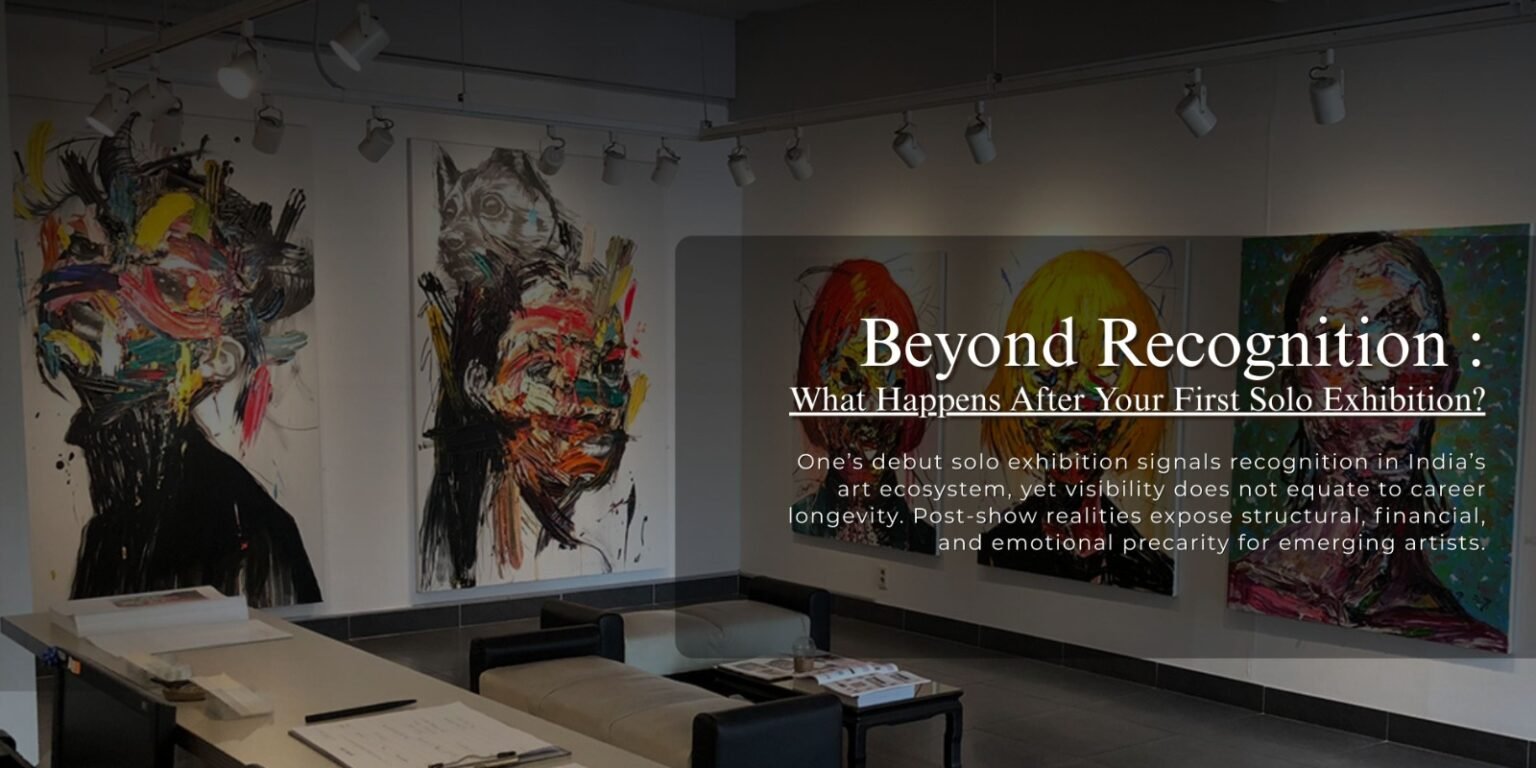

For emerging artists in India, the first solo exhibition is a milestone. Months or years of labor converge into a public presentation, a space where audiences, curators, and potential collectors encounter the artist’s work. Cities like Mumbai, Delhi, Bengaluru, and Kolkata celebrate these debuts as markers of promise. Yet, while visibility confers recognition and emotional fulfillment, it is not synonymous with sustainability. Many artists find that the excitement of the first show is fleeting, and structural realities, financial precarity, market gatekeeping, and emotional strain, become evident once the spotlight fades.
The Reality of Market Gatekeeping
Access to galleries, collectors, and institutions remains highly selective in India. Major urban galleries often represent a small circle of established artists, making continued visibility after a debut difficult. Participation in high-profile fairs like India Art Fair or the Kochi-Muziris Biennale is similarly limited, with hundreds vying for only a few opportunities. Even when selected, emerging artists may gain visibility without long-term engagement, highlighting the gulf between recognition and career sustainability. Without consistent access to networks, the debut show can become an isolated peak rather than a springboard.
Financial and Emotional Precarity
Producing a solo show requires significant investment: materials, framing, transportation, promotion, and cataloging often fall on the artist. Even when sales occur, proceeds rarely guarantee a stable livelihood. Beyond finances, artists frequently experience burnout and post-show anxiety. The intense labor of production, coordination, and public engagement is emotionally taxing. Once the exhibition ends, many artists confront uncertainty about their next steps, facing the psychological challenges of intermittent validation and the pressures of a highly competitive art ecosystem.
Adaptive Strategies for Sustainability
In response to precarity, Indian artists adopt diverse strategies to sustain their practice. Teaching, collaborative projects, writing, and residencies provide both income and creative stimulation. Digital platforms allow artists to maintain dialogue with audiences, bypassing traditional gatekeepers. Such diversification reframes sustainability as multi-dimensional: creative survival is no longer solely dependent on gallery representation or sales but also on engagement, visibility, and networks that nurture ongoing practice
Alternative Spaces and Emerging Opportunities
The rise of artist-run initiatives, public art projects, and alternative venues is significant. Homes, warehouses, streets, and online exhibitions are redefining where and how art is experienced. These spaces are less commercially driven, allowing risk-taking, experimentation, and engagement with local communities. For emerging artists, such platforms provide visibility, collaboration, and validation outside conventional market pressures, reinforcing that sustainability is not dependent solely on traditional gallery circuits.
Toward Structural Support for Emerging Artists
While individual strategies matter, systemic support is critical. Institutions, curators, and collectors increasingly recognize that nurturing emerging talent requires more than showcasing a debut. Programs like mentorships, acquisition funds, residencies, and long-term commissioning ensure that visibility translates into sustainable careers. Strengthening these infrastructures can help bridge the gap between the excitement of debut exhibitions and the ongoing realities of artistic practice in India.
Beyond Visibility
The first solo show is a moment of exhilaration and achievement, but it is not an endpoint. Post-show, artists confront financial uncertainty, emotional strain, and limited professional pathways. Sustainability depends on adaptive strategies, supportive networks, and institutional interventions. Ultimately, ensuring that emerging artists thrive beyond their first exhibition requires collective investment from the art ecosystem, transforming visibility into enduring artistic presence