




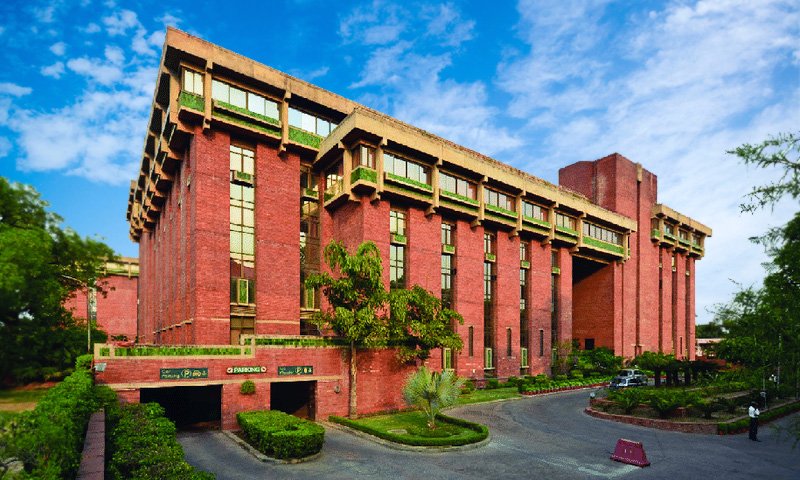

Amid the bustle of Delhi’s modern landscape, the India Habitat Centre (IHC) stands as a living embodiment of harmony — where design, ecology, and art converse in quiet sophistication. Conceived as more than a collection of buildings, the IHC was envisioned as a collaborative space uniting individuals and institutions working across disciplines that shape human habitat and urban living.
This visionary concept was brought to life by Santosh Sharma, then Chairman of the Housing and Urban Development Corporation (HUDCO). His idea was to create an environment that transcended the bureaucratic confines of government offices — a space where architecture, art, research, and dialogue could thrive together. It was a bold undertaking: to build not just a complex, but a cultural and ecological institution that would redefine how India thinks about urban spaces.
Curating the Soul of IHC
In the 1980s, as Delhi expanded into a new era of urban growth, HUDCO sought to infuse cultural depth into the concept of the India Habitat Centre. To achieve this, HUDCO collaborated with its advisor Mrs. Rekha Mody, founder of Genesis Gallery in Kolkata. Together, they envisioned IHC not merely as a workplace but as a living gallery — a space where art could seamlessly integrate with architecture, ecology, and urban design.
This partnership was transformative. Rekha Mody’s curatorial insight introduced a cultural vibrancy that set IHC apart from other institutional spaces in India. Under her guidance, the Centre evolved into a multidisciplinary hub, bridging the domains of architecture, environmental consciousness, and creative expression. The India Habitat Centre thus became both a think tank and an artistic sanctuary — where sustainability met aesthetics and where design found its moral compass in ecology.
Manjula Badhwar Mayor: The Cultural Architect
If Santosh Sharma provided the vision and Rekha Mody the direction, it was Mrs. Manjula Badhwar Mayor — founder of Gallery Silver Scapes — who gave the India Habitat Centre its artistic soul. A veteran curator and cultural visionary, Mrs. Mayor was instrumental in establishing the Habiart Gallery, a cornerstone of IHC’s artistic identity.
Through her curatorial work, she helped shape India’s contemporary art movement, bringing together a generation of artists, sculptors, and photographers whose works reflected the changing social and cultural landscapes of India. Her contribution went beyond exhibitions — she nurtured a community of creative thinkers, turning IHC into a gathering place for dialogue and discovery.
Under her influence, the Habiart Gallery became one of Delhi’s most respected cultural spaces — where young and established artists alike found a platform to showcase their vision. Mrs. Mayor’s belief that “art must live within the spaces we inhabit” continues to resonate in every corner of IHC’s campus.
A Legacy Rooted in Mentorship and Heritage
Mrs. Mayor’s passion for art was deeply rooted in her lineage. Guided by the cultural legacy of her grandfather, Dewan Saheb Jarmani Das, and mentored by Bimal Das Gupta, one of India’s pioneers of abstraction, she cultivated an eye for curation that balanced innovation with tradition.
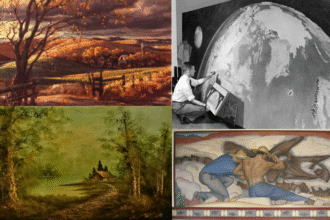
Her exhibitions at IHC featured many of India’s leading artists — bridging modernist expressions with emerging voices. These shows were not just about displaying art; they were about creating dialogue — between artist and audience, between modernity and heritage. Through her vision, IHC became a place where India’s artistic evolution could be witnessed firsthand.
From Habiart to Visual Arts Gallery
Today, the Habiart Gallery lives on as the Visual Arts Gallery, continuing its mission of promoting contemporary Indian art. The space has hosted iconic sculptures and exhibitions, blending craftsmanship with conceptual depth. Among the highlights is “Witness the Power” by Paresh Maity, a monumental sculpture crafted from 8,500 temple bells. The piece captures the essence of energy, resilience, and spiritual harmony, resonating — quite literally — with the rhythm of India’s cultural soul.
The gallery also showcases the works of acclaimed artists like Sanjay Bhattacharya, whose evocative canvases explore human emotion, architectural form, and light with poetic sensitivity. Together, artists like Maity and Bhattacharya represent the living legacy of IHC’s commitment to art as experience — an encounter between viewer, space, and meaning.
Through its exhibitions, the Visual Arts Gallery continues to champion the dialogue between modern and traditional, reaffirming IHC’s role as a beacon for creative innovation in India’s capital.
STEIN DOSHI BHALLA: Ecology by Design
While art gave IHC its heart, architecture gave it its form. The architectural brilliance behind the India Habitat Centre is the work of Joseph Allen Stein, in collaboration with B.V. Doshi and DR. J.R. Bhalla.
Stein, a visionary architect known for his deep environmental sensitivity, believed in “ecology by design” — a philosophy that merges built form with nature’s logic. His design for IHC reflects this ethos at every level: shaded courtyards, exposed brick facades, interlocking corridors, and green terraces create an organic rhythm of space and light.
The campus embodies a dialogue between the natural and the constructed, encouraging sustainability not as a trend but as an instinct. Long before the term “green architecture” became fashionable, Stein had already woven ecological intelligence into the DNA of IHC.
An Architectural Symphony of Spaces
What makes the India Habitat Centre unique is its seamless integration of function and form. The complex unites diverse elements — institutions, auditoria, libraries, exhibition halls, conference rooms, restaurants, and galleries — into a single harmonious ecosystem.
Stein’s design philosophy was rooted in balance: between activity and reflection, openness and enclosure. Walking through IHC is like experiencing an architectural symphony — courtyards flow into shaded corridors, art installations meet water bodies, and every brick seems to breathe with purpose.
It is this interplay of space, texture, and light that gives IHC its meditative character — a place where art, intellect, and environment converge in perfect rhythm.
The Symbol: Harmony of Shakti and Shiva
Even IHC’s logo embodies this philosophy of balance. The emblem merges the male (Shiva) and female (Shakti) energies — symbolizing creation, equilibrium, and universal harmony. Inspired by Bhimbetka rock art, one of India’s earliest expressions of human creativity, the logo captures the cosmic unity that underpins the Centre’s identity.
It is a fitting symbol for an institution that celebrates coexistence — of ideas, disciplines, and energies. Just as Shiva and Shakti represent the dual forces of the universe, IHC stands as a reminder that progress and preservation, art and ecology, must exist together.
Conclusion
In the midst of Delhi’s urban chaos, the India Habitat Centre stands as a sanctuary of balance. Its red-brick facades echo the warmth of community, its open courtyards hum with intellectual exchange, and its galleries pulse with creativity.
Here, bricks breathe art, courtyards nurture ideas, and design mirrors the soul of a sustainable India.
More than three decades after its inception, the IHC continues to inspire collaboration, sustainability, and creativity, embodying the timeless belief that design is not just about buildings — it’s about the life that flows within them.